Tibetan Script Gospel Meditation – Mark 14:3-9

Mark 14.3-9 w B

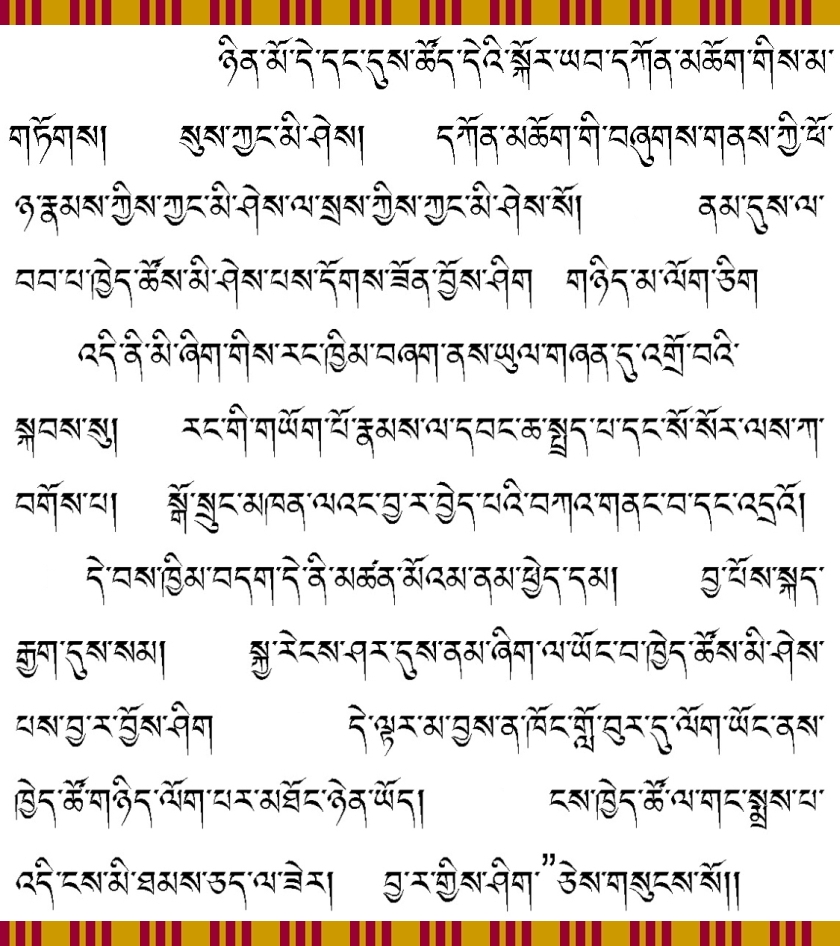
And while he was at Bethany at the house of Simon the leper, as he was reclining at table, a woman came with an alabaster flask of ointment of pure nard, very costly, and she broke the flask and poured it over his head. There were some who said to themselves indignantly, “Why was the ointment wasted like that? For this ointment could have been sold for more than three hundred denarii and given to the poor.” And they scolded her.  But Jesus said, “Leave her alone. Why do you trouble her? She has done a beautiful thing to me. For you always have the poor with you, and whenever you want, you can do good for them. But you will not always have me. She has done what she could; she has anointed my body beforehand for burial. And I say to you, wherever the gospel is proclaimed in the whole world, what she has done will be told in memory of her.”

Some said, ‘So wasteful an act!’

Yeshu knew what they were muttering. ‘No, it is not. Such an act of worship while I am still alive is just lovely, and it is so heartfelt as to be without care for either expense or public opinion. Moreover what you say about the poor is different from what some of you are actually thinking!’

Read on to discover how one of them wanted money for himself, not for the poor.
Tibetan Script Gospel Meditation – Mark 14:1,2

Mark 14.1-2 w B

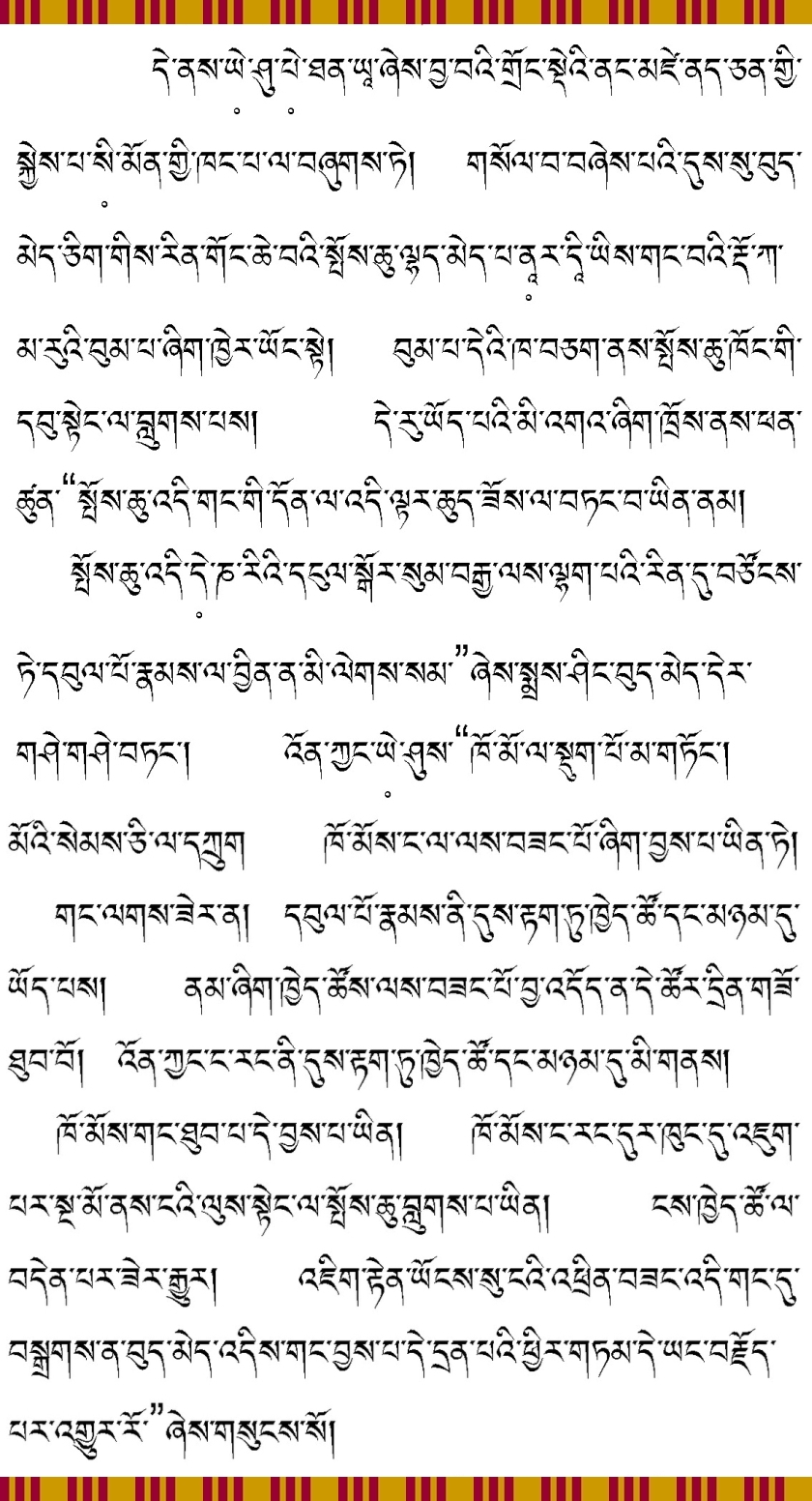
It was now two days before the Passover and the Feast of Unleavened Bread. And the chief priests and the scribes were seeking how to arrest him by stealth and kill him, for they said, “Not during the feast, lest there be an uproar from the people.”

Passover was a festival when the Jews sacrificed lambs. It was a way of cross - 200 pxremembering with thanks their liberation by God from their suffering in ancient Egypt, and how they escaped from slavery carrying just travelling food for the journey.

Yeshu gave the Jews the opportunity to kill him at Passover time as a sacrifice to clear our sins. In this way we believers are liberated from the slavery and suffering of samsara and are invited into the unfading life of God’s heaven. (Because Yeshu is the Lamb of God, the sacrifice of those lambs for the sins of men is no longer necessary)

In the next two chapters we learn about Yeshu’s arrest and how he died on a cross.

Tibetan Script Gospel Meditation – Mark 13:32-37

Mark 13.32-37 w B

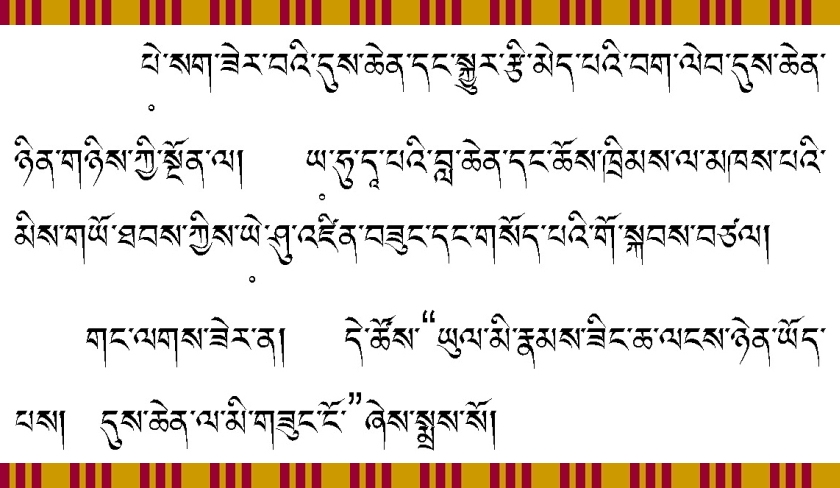
” … But concerning that day or that hour, no one knows, not even the angels in heaven, nor the Son, but only the Father. Be on guard, keep awake. For you do not know when the time will come. It is like a man going on a journey, when he leaves home and puts his servants in charge, each with his work, and commands the door-keeper to stay awake. Therefore stay awake – for you do not know when the master of the house will come, in the evening, or at midnight, or when the cock crows, or in the morning – lest he come suddenly and find you asleep. And what I say to you I say to all: Stay awake.”

Yeshu now completes his answer to the disciples’ question: ‘How can we know when the great day of the end of this world is about to come?’ Watch out, it could be today, even this minute!

Each disciple of Christ, like the life-servants (tshe-g.yog) in a great house (dpon-shag), has his own duty. So too each one of us must this very day, like the door-keeper (sgo-r-ba), be alert and ready for Yeshu’s return. Are we watchfully doing his work?