The Acts of the Apostles – Acts 15:36 – 16:5 མཛད་པ། 15:36 – 16:5

(མཛད་པ། 15:36 – 16:5)

acts-15-36-16-5-w-b


And after some days Paul said to Barnabas, “Let us return and visit the brothers in every city where we proclaimed the word of the Lord, and see how they are.” Now Barnabas wanted to take with them John called Mark. But Paul thought best not to take with them one who had withdrawn from them in Pamphylia and had not gone with them to the work. And there arose a sharp disagreement, so that they separated from each other. Barnabas took Mark with him and sailed away to Cyprus, but Paul chose Silas and departed, having been commended by the brothers to the grace of the Lord. And he went through Syria and Cilicia, strengthening the churches.

Paul came also to Derbe and to Lystra. A disciple was there, named Timothy, the son of a Jewish woman who was a believer, but his father was a Greek. He was well spoken of by the brothers at Lystra and Iconium. Paul wanted Timothy to accompany him, and he took him and circumcised him because of the Jews who were in those places, for they all knew that his father was a Greek. As they went on their way through the cities, they delivered to them for observance the decisions that had been reached by the apostles and elders who were in Jerusalem. So the churches were strengthened in the faith, and they increased in numbers daily. (Acts 15:36 – 16:5)


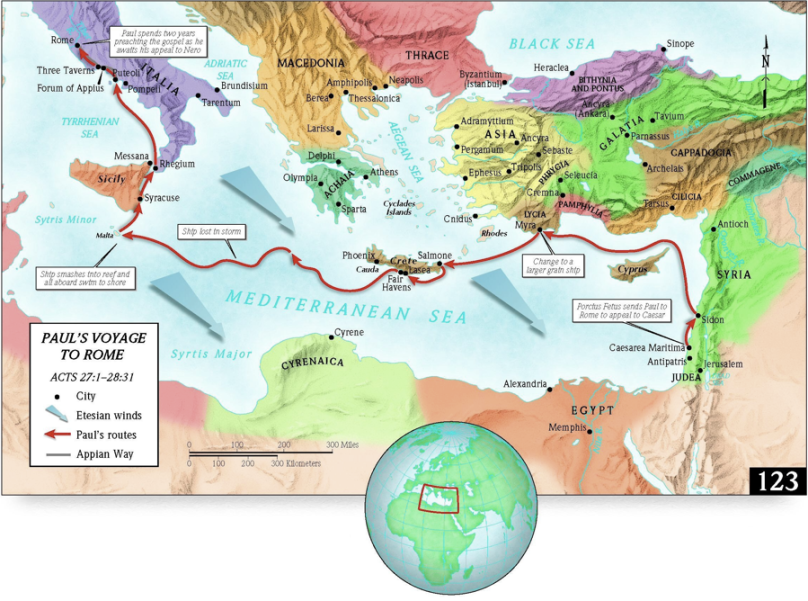
Following the disagreement, this time there were two teams sent out by the Antioch Church. Barnabas, who was an encourager of young believers (see Acts 4:36 and 9:27), took Mark with him to his native country (Acts 4:36) of Cyprus. Under his care Mark would become a useful servant of the gospel, and even receive praise from Paul one day.

Paul with Silas visited churches in Syria and Cilicia taking with them the letter from Jerusalem, and then going on to revisit Derbe and Lystra (Acts 14:6). At Lystra lived the young man Timothy who would become an important church leader in days to come.

Silas was well chosen as a brave and hardy companion for Paul, a gospel soldier as it were. The story of their campaign with its achievements and difficulties is told in Chapters 16 and 17; so keep on reading!

paul-2nd-journey-120

*map source here @ http://www.searchingthescriptures.net

The Acts of the Apostles – Acts 16:6-10 མཛད་པ། 16:6-10

(མཛད་པ། 16:6-10)

acts-16-6-10-w-b


And they went through the region of Phrygia and Galatia, having been forbidden by the Holy Spirit to speak the word in Asia. And when they had come up to Mysia, they attempted to go into Bithynia, but the Spirit of Jesus did not allow them. So, passing by Mysia, they went down to Troas. And a vision appeared to Paul in the night: a man of Macedonia was standing there, urging him and saying, “Come over to Macedonia and help us.” And when Paul had seen the vision, immediately we sought to go on into Macedonia, concluding that God had called us to preach the gospel to them. (Acts 16:6-10)


It seemed good to Paul and Silas to continue going west so as to preach the gospel in Asia (The whole western part of the country that is Turkey today was the Roman province of Asia). But they faced a ‘No Entry’ sign; we do not know how God’s Holy Spirit spoke to them.

So they set off on the long northward journey to the province of Bithynia. Again Jesus said ‘No’ to them in some manner. And so without stopping anywhere they made the long journey westward down to Troas. Where to go next? And there God gave them directions, using the vision of a man calling ‘Come, help us’.

As a result they made plans to cross the sea to Europe (See map posted last week). God’s obedient servants will know his guidance.

acts-002-paul-2nd-journey-800-px

paul-2nd-journey-120-800px

The Acts of the Apostles – Acts 16:11-15 མཛད་པ། 16:11-15

(མཛད་པ། 16:11-15)

acts-16-11-15-w-b


So, setting sail from Troas, we made a direct voyage to Samothrace, and the following day to Neapolis, and from there to Philippi, which is a leading city of the[d] district of Macedonia and a Roman colony. We remained in this city some days. And on the Sabbath day we went outside the gate to the riverside, where we supposed there was a place of prayer, and we sat down and spoke to the women who had come together. One who heard us was a woman named Lydia, from the city of Thyatira, a seller of purple goods, who was a worshiper of God. The Lord opened her heart to pay attention to what was said by Paul. And after she was baptized, and her household as well, she urged us, saying, “If you have judged me to be faithful to the Lord, come to my house and stay.” And she prevailed upon us. (Acts 16:11-15)


Philippi was a colony for retired Roman soldiers, and ruled by them; so, in that sense, it really was autonomous. Any Jews, and other believers in Almighty God, were only allowed to meet for worship outside the city. It was there on the holy day that Paul, Silas and Luke found a meeting place where they told the good news of the Saviour Jesus Christ to the women who gathered.

There God spoke to one of them through Paul’s words. She was a business lady called Lydia, who sold the purple-dyed cloth for which her native region was famous.

It was in this way that a church would come into being. But before that happened there would be trouble. Read on to learn what happened next.