The Acts of the Apostles – Acts 6:1-7 མཛད་པ། 6:1-7

(མཛད་པ། 6:1-7)

Acts 6.1-7 w B


Now in these days when the disciples were increasing in number, a complaint by the Hellenists arose against the Hebrews because their widows were being neglected in the daily distribution. 2 And the twelve summoned the full number of the disciples and said, “It is not right that we should give up preaching the word of God to serve tables. 3 Therefore, brothers, pick out from among you seven men of good repute, full of the Spirit and of wisdom, whom we will appoint to this duty. 4 But we will devote ourselves to prayer and to the ministry of the word.” 5 And what they said pleased the whole gathering, and they chose Stephen, a man full of faith and of the Holy Spirit, and Philip, and Prochorus, and Nicanor, and Timon, and Parmenas, and Nicolaus, a proselyte of Antioch. 6 These they set before the apostles, and they prayed and laid their hands on them.
7 And the word of God continued to increase, and the number of the disciples multiplied greatly in Jerusalem, and a great many of the priests became obedient to the faith. (Acts 6:1-7)


Believing widows from a non-Jewish background felt that they were being overlooked by the apostles. So other spiritual men of ability and were found to administer the aid, in order that the apostles could concentrate on God’s purpose for them to preach.

As a result the good news kept spreading, even among religious leaders.

The Acts of the Apostles – Acts 6:8-15 མཛད་པ། 6:8-15

(མཛད་པ། 6:8-15)

Acts 6.8 - 15 w B


8 And Stephen, full of grace and power, was doing great wonders and signs among the people. 9 Then some of those who belonged to the synagogue of the Freedmen (as it was called), and of the Cyrenians, and of the Alexandrians, and of those from Cilicia and Asia, rose up and disputed with Stephen. 10 But they could not withstand the wisdom and the Spirit with which he was speaking. 11 Then they secretly instigated men who said, “We have heard him speak blasphemous words against Moses and God.” 12 And they stirred up the people and the elders and the scribes, and they came upon him and seized him and brought him before the council, 13 and they set up false witnesses who said, “This man never ceases to speak words against this holy place and the law, 14 for we have heard him say that this Jesus of Nazareth will destroy this place and will change the customs that Moses delivered to us.” 15 And gazing at him, all who sat in the council saw that his face was like the face of an angel. (Acts 6:8-15)


One of the new administrators, Stephen, could also speak effectively in debate. But because they could not beat him, this angered the Jews of certain groups. So they planned a false charge against Stephen of blasphemy against Moses and God, by accusing him of saying that Yeshu would destroy the temple and sangha.

Read on to find how God’s Holy Spirit would help Stephen to give answer to these charges.

*****************

Stephen gave a long speech. In it he shows himself innocent of blasphemy against God, and then what is his real attitude to the holy place ( gnasmchok ), the law ( khrimssrol ), and to Moses. We will treat his speech in five sections.


The Acts of the Apostles – Acts 7:1-16 མཛད་པ། 7:1-16

(མཛད་པ། 7:1-16)

Acts 7.1 - 16 w B


And the high priest said, “Are these things so?” 2 And Stephen said: “Brothers and fathers, hear me. The God of glory appeared to our father Abraham when he was in Mesopotamia, before he lived in Haran, 3 and said to him, ‘Go out from your land and from your kindred and go into the land that I will show you.’ 4 Then he went out from the land of the Chaldeans and lived in Haran. And after his father died, God removed him from there into this land in which you are now living. 5 Yet he gave him no inheritance in it, not even a foot’s length, but promised to give it to him as a possession and to his offspring after him, though he had no child. 6 And God spoke to this effect—that his offspring would be sojourners in a land belonging to others, who would enslave them and afflict them four hundred years. 7 ‘But I will judge the nation that they serve,’ said God, ‘and after that they shall come out and worship me in this place.’ 8 And he gave him the covenant of circumcision. And so Abraham became the father of Isaac, and circumcised him on the eighth day, and Isaac became the father of Jacob, and Jacob of the twelve patriarchs.

9 “And the patriarchs, jealous of Joseph, sold him into Egypt; but God was with him 10 and rescued him out of all his afflictions and gave him favor and wisdom before Pharaoh, king of Egypt, who made him ruler over Egypt and over all his household. 11 Now there came a famine throughout all Egypt and Canaan, and great affliction, and our fathers could find no food. 12 But when Jacob heard that there was grain in Egypt, he sent out our fathers on their first visit. 13 And on the second visit Joseph made himself known to his brothers, and Joseph’s family became known to Pharaoh. 14 And Joseph sent and summoned Jacob his father and all his kindred, seventy-five persons in all. 15 And Jacob went down into Egypt, and he died, he and our fathers, 16 and they were carried back to Shechem and laid in the tomb that Abraham had bought for a sum of silver from the sons of Hamor in Shechem.

(Acts 7:1-16)


History of Israel

1. Story of the Fathers

The council listened attentively to the long story. They loved to hear how Israel was called by God to be his own people.

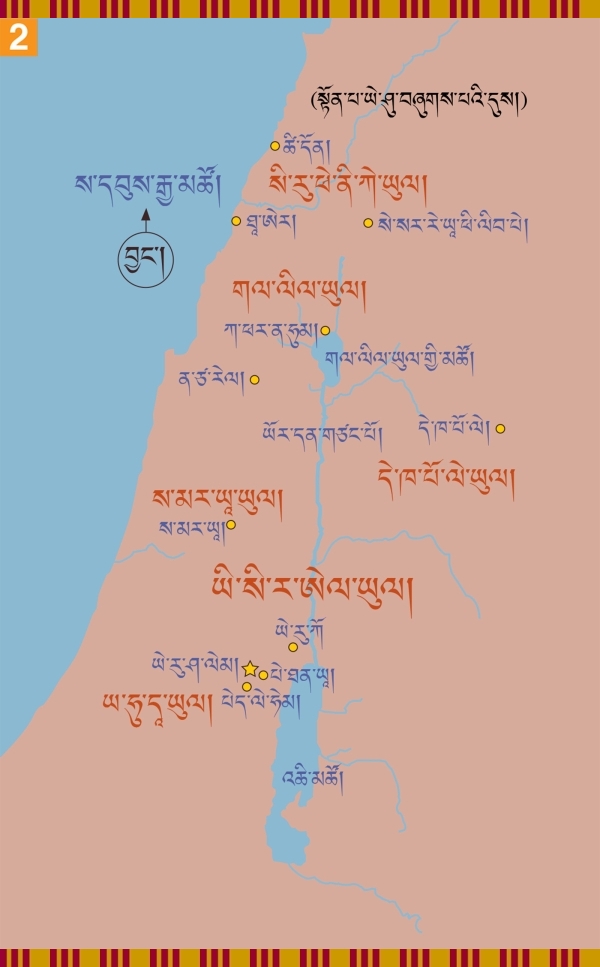
It started with Abraham (in what is modern Iraq) to whom God promised a land which at that time was called Canaan. So Abraham and his few followers went as nomads to go and live there in tents. There Isaac was born as Abraham’s son; then Jacob his grandson. And Jacob had sons, the twelve ancestors of Israel, of whom Joseph was the youngest.

But still they had no land except a field for a burial place.

Then, through the remarkable appointment of Joseph as viceroy, they came to live in Egypt for many generations.