Tibetan Script Gospel Meditation – Mark 12:1-12

Mark 12.1-12 w BMark 12:1-12

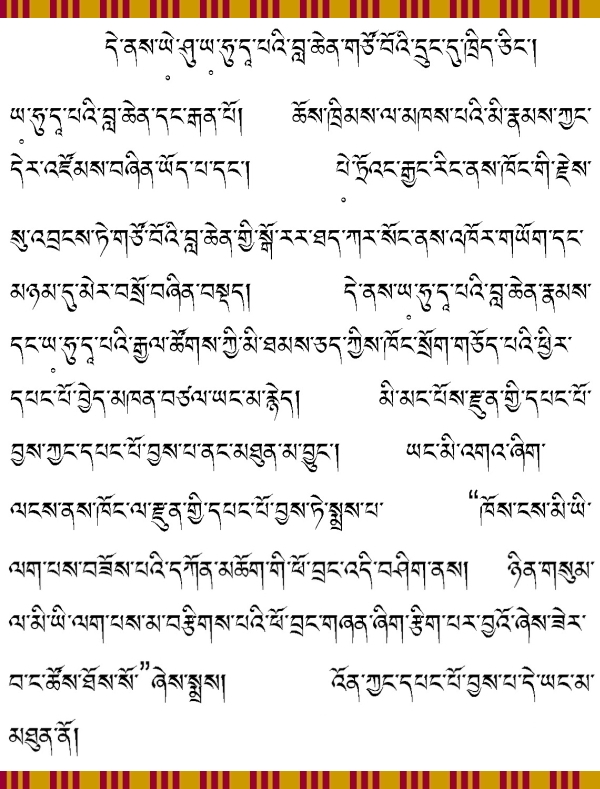
And he began to speak to them in parables. “A man planted a vineyard and put a fence around it and dug a pit for the wine press and built a tower, and leased it to tenants and went into another country. When the season came, he sent a servant to the tenants to get from them some of the fruit of the vineyard. And they took him and beat him and sent him away empty-handed. Again he sent to them another servant, and they struck him on the head and treated him shamefully. And he sent another, and him they killed. And so with many others:  some they beat, and some they killed. He had still one other, a beloved son. Finally he sent him to them, saying, ‘They will respect my son.’ But those tenants said to one another, ‘This is the heir. Come, let us kill him, and the inheritance will be ours.’ And they took him and killed him and threw him out of the vineyard. What will the owner of the vineyard do? He will come and destroy the tenants and give the vineyard to others. Have you not read this scripture:

“‘The stone that the builders rejected has become the cornerstone; this was the Lord’s doing, and it is marvellous in our eyes’?”

And they were seeking to arrest him but feared the people, for they perceived that he had told the parable against them. So they left him and went away.

The Jewish Sangha were angered by this story. We need to understand how they knew that Yeshu spoke against them by examining each part of it.

The vineyard: it was a picture of Israel, God’s own people, the Jewish nation. The tenants: they were the sangha, to whom were given its care. The fruit: it was the offering of their worship that God expected from them. The servants: they were the prophets sent to stir up true faith and obedience. The beloved son: it was Yeshu himself, now about to be killed by the sangha.

As for the sutra, the Jewish leaders knew it well; they held that it spoke of the Messiah. What to say? Yeshu was declaring, ‘I am the Messiah, and you are rejecting me. Further he was prophesying that God would bring the sangha to an end.


Tibetan Script Gospel Meditation – Mark 11:27-33

Mark 11.27-33 w B

Mark 11:27-33

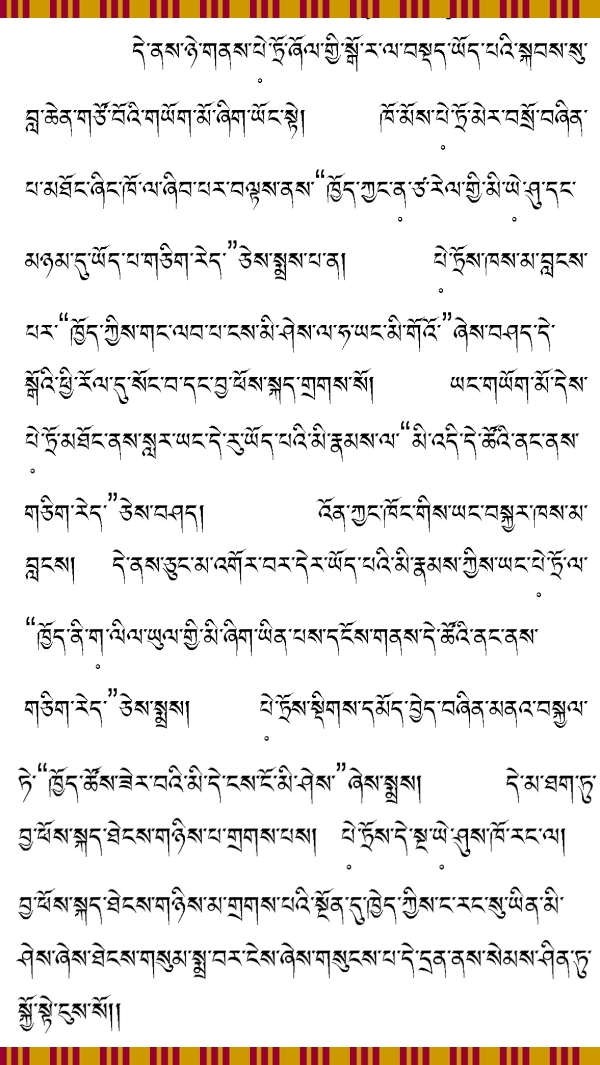
And they came again to Jerusalem. And as he was walking in the temple, the chief priests and the scribes and the elders came to him, and they said to him, “By what authority are you doing these things, or who gave you this authority to do them?” Jesus said to them, “I will ask you one question; answer me, and I will tell you by what authority I do these things. Was the baptism of John from heaven or from man. Answer me.” And they discussed it with one another, saying, “If we say, ‘From heaven’, he will say, ‘Why then did you not believe him?’ But shall we say, ‘from man?'” — they were afraid of the people, for they all held that John really was a prophet. So they answered Jesus, “We do not know.” And Jesus said to them, “Neither will I tell you by what authority I do these things.”

As for these Jewish geshes (dge-bshes), who were secure in their own self-appointed authority, see, they were too proud to acknowledge that the authority of Yeshu, the village carpenter, came from God.

Tibetan Script Gospel Meditation – Mark 11:25

Mark 11.25 w B

Mark 11:25

And whenever you stand praying, forgive, if you have anything against anyone, so that your Father also who is in heaven may forgive you your trespasses.

If I desire forgiveness, that is the complete removal of all negative karma in my life which are obstacles like a big mountain, I must not cling to thoughts of anger, hatred and jealousy in my mind.

Because I for my part do not desire God’s anger, but his certain loving compassion in forgiving me, just so I too must be compassionate to others. How else can he forgive me?

As for a hating man or a sorcerer, God will certainly not clear his sins.