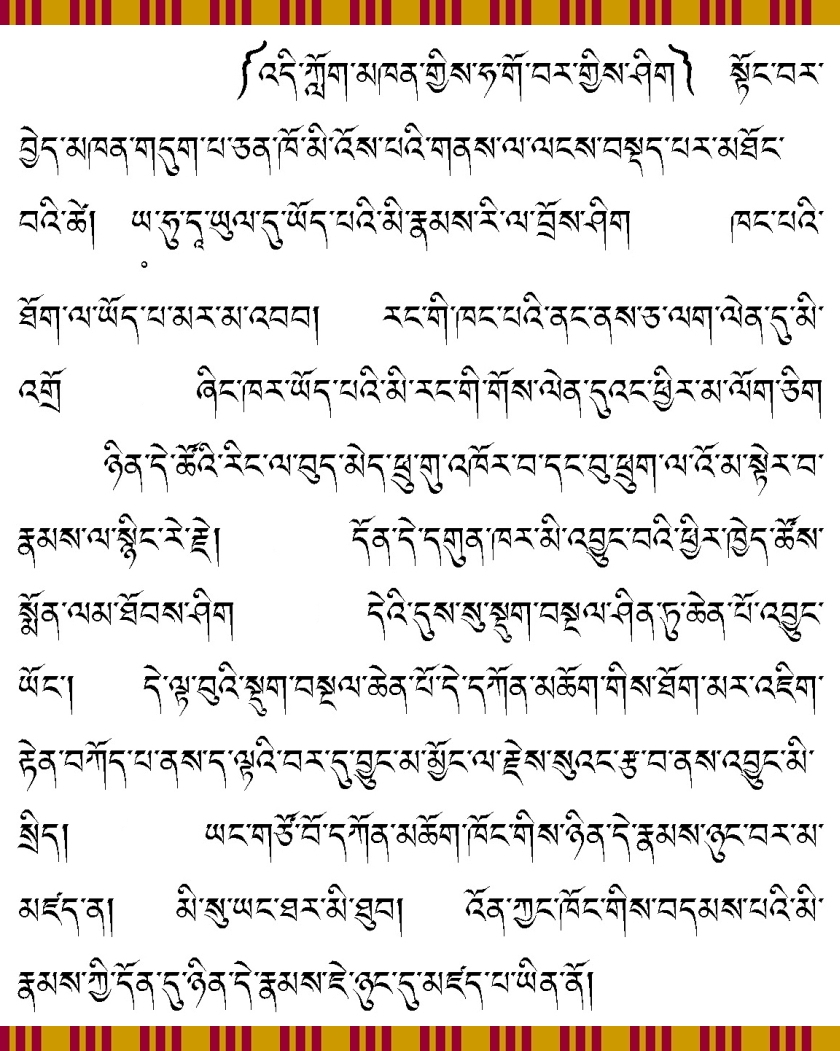
Tibetan Script Gospel Meditation – Mark 13:14-20

Mark 13.14-20 w B

But when you see the abomination of desolation standing where he ought not to be (let the reader understand), then let those who are in Judea flee to the mountains. Let the one who is on the housetop not go down, nor enter his house, to take anything out, and let the one who is in the field not turn back to take his cloak. And alas for women who are pregnant and for those who are nursing infants in those days!  Pray that it may not happen in winter. For in those days there will be such tribulation as has not been since the beginning of the creation that God created until now, and never will be. And if the Lord had not cut short the days, no human being would be saved. But for the sake of the elect, whom he chose, he shortened the days.

Historians believe that when Mark wrote his gospel he and his first readers were in Rome. Those of them who were Jews would ‘understand’ the code-language that he now uses for secrecy in answering Andrew’s first question.

Yeshu is foretelling the crushing of the Great Revolt that took place 40 years later, when Roman battle standards, having a picture of the Emperor (like some ‘abominable’ thanka of a heretic’s god) would be planted to ‘stand’ on the site of the temple of God in Jerusalem. Following the overthrow of this uprising and two further ones against the Romans, Israel suffered as no other country even in the history of Central Asia would suffer more. Over a million Jews died.

It happened just as Jesus warned. And in the year 70 (AD 70 means 70 years after Yeshu’s birth) many believers, Yeshu’s chosen ones (who were already being called Christians), did escape to the city of Pella (in what is now modern Jordan) during, it is thought, a lull in the fighting.

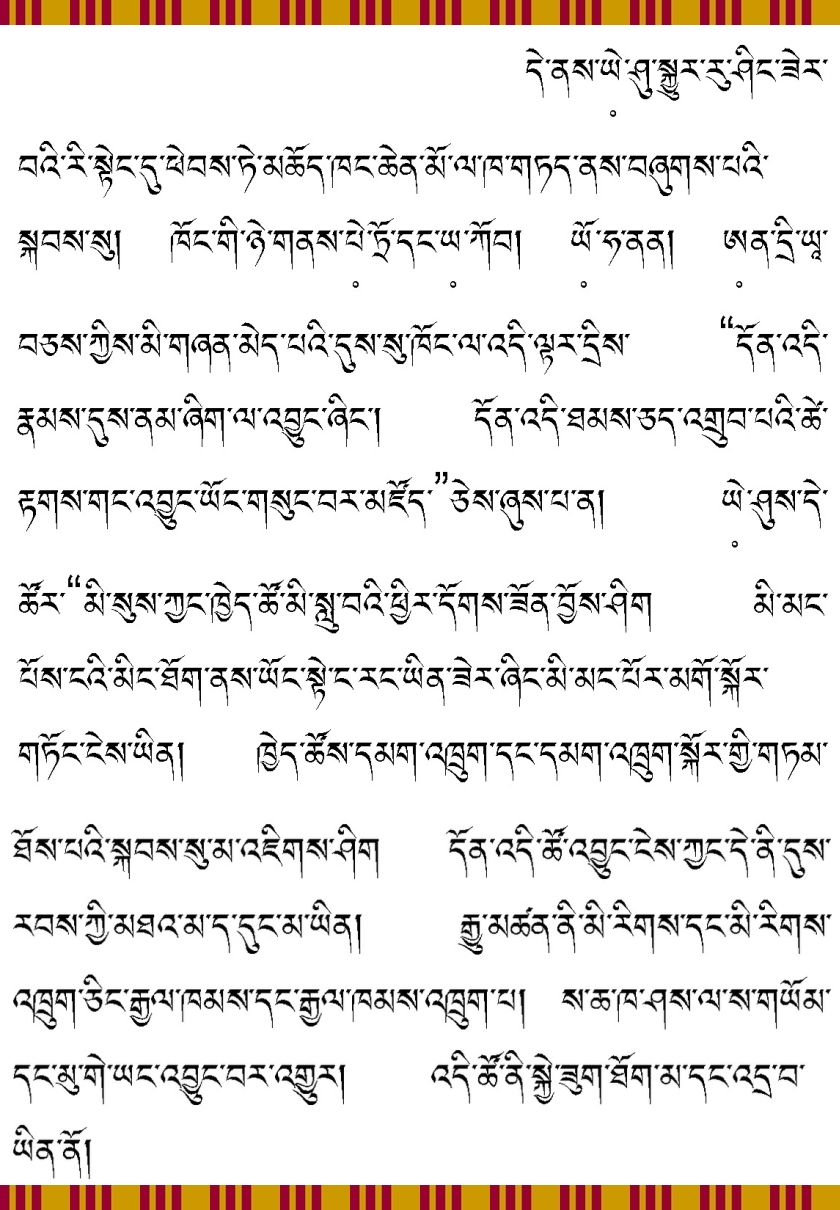
Tibetan Script Gospel Meditation – Mark 13:9-13

Mark 13.9-13 w B

“But be on you guard. For they will deliver you over to councils, and you will be beaten in synagogues, and you will stand before governors and kings for my sake, to bear witness before them. And the gospel must first be proclaimed to all nations. And when they bring you to trial and deliver you over, do not be anxious beforehand what you are to say, but say whatever is given you in that hour, for it is not you who speak, but the Holy Spirit. And brother will deliver brother over to death, and the father his child, and childen will rise against parents and have them put to death. And you will be hated by all for my name’s sake. But the one who endures to the end will be saved.”

Yeshu continues to urge his disciples not to be alarmed about the future, but rather to be concerned about their present life. He gives three reasons for not worrying, and if we are disciples they would have this kind of meaning for us today:

1. Instead of worrying about the end of all things, you must set your minds on preaching the good news, so that all men including your own people hear before the end comes.

2. However because of your preaching some of you will indeed be arrested. Yet don’t be anxious now about how you are going to give answer to police and lamas. Instead trust God because he will put his words on your lips.

3. And some of your close relatives will oppose you, even kill you; and they will curse you for your poor rebirth. However don’t let this also worry you, because you only die once. And, instead, by faithfully pressing to the end of your journey as disciples, you will certainly achieve the short path to liberation.

Tibetan Script Gospel Meditation – Mark 13:3-8

Mark 13.3-8 w B

And as he sat on the Mount of Olives opposite the temple, Peter and James and John and Andrew asked him privately, “Tell us, when will these things be, and what will be the sign when all these things are about to be accomplished?” And Jesus began to say to them, ” See that no one leads you astray. Many will come in my name, saying, ‘I am he!’ and they will lead many astray. And when you hear of wars and rumours of wars, do not be alarmed. This must take place, but the end is not yet. For nation will rise against nation and kingdom against kingdom. There will be earthquakes in various places; there will be famines. These are but the beginning of the birth pains.”

The disciples must have been full of questions. And here are two such: ‘When will it all happen?’ and ‘How shall we know in advance?’ Today also men have such questions about the future.

Here and in the rest of this chapter Yeshu begins to give answers to these and also to other questions. But nowhere does he give to either the disciples or us such foreknowledge as they ask. Indeed, in these verses he does not even give an answer about the temple’s destruction; that answer seems to be given later in verses 14 onwards. Instead he warns them against believing two kinds of sign: 1. Those men who will make claim to be the Messiah coming again.. 2. The claim that great upheavals, like a world war or the Sichuan earthquake in 2008, are a sign of the end of the world and God’s judgment day.

Yeshu says, ‘Yes, many will make such claims; and there will be many more such disasters, but they will serve only as the painful foretaste of the coming end.’