Tibetan Script Gospel Meditation – Mark 11:11-14

Mark 11.11-14 w B

Mark 11:11-14

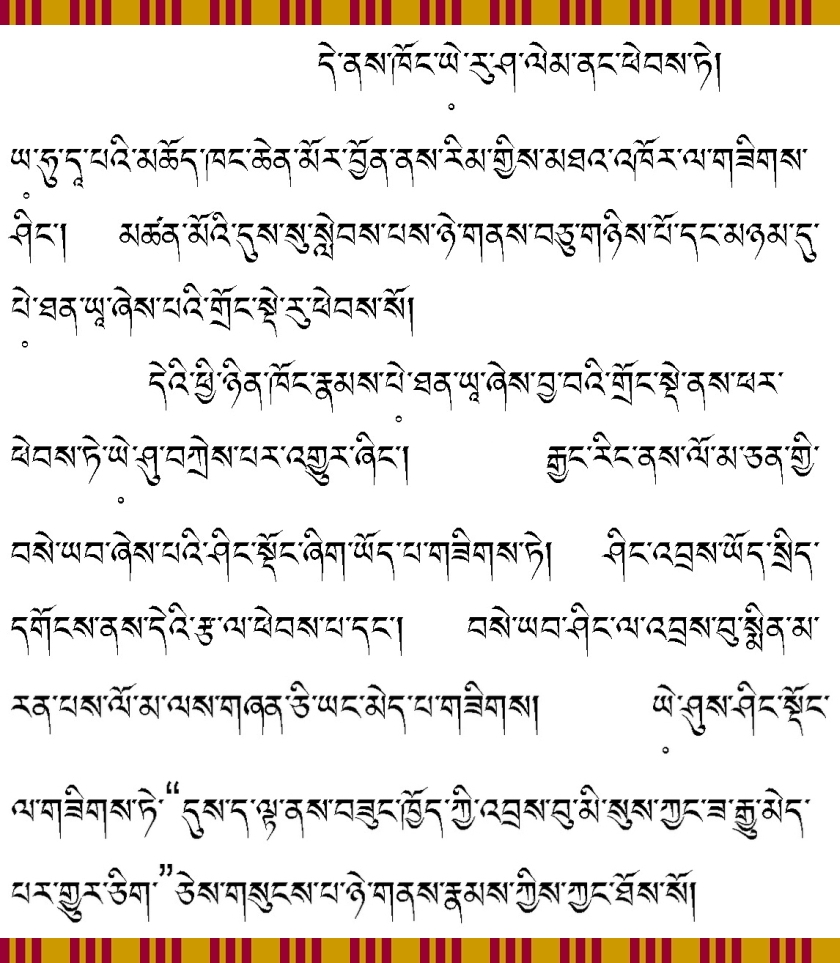
And he entered Jerusalem and went into the temple. And when he had looked around at everything, as it was already late, he went out to Bethany with the twelve.

On the following day, when they came from Bethany, he was hungry. And seeing in the distance a fig tree in leaf, he went to see if he could find anything on it. When he came to it, he found nothing but leaves, for it was not the season for figs. And he said to it, “May no one ever eat fruit from you again.” And his disciples heard it.

After looking at the misuse of the temple, Yeshu went to find lodging.  As for the words spoken to the fig tree, what to say? Was he, in his thoughts, commanding the tree with no figs never to produce fruit again? or  was he giving words to a condemnation in his mind of the Jewish sangha (dke-‘dun)? Because no prayer and sound teaching – like figs as it were for spiritually hungry people – were to be found in their temple, so he would command the  whole system of temple worship to come to an end.

[Read next message for what Yeshu saw in the temple, and read the one after that for what happened to the fig tree]
Tibetan Script Gospel Meditation – Mark 11:1-10

Mark 11.1-10 w B

Mark 11:1-10

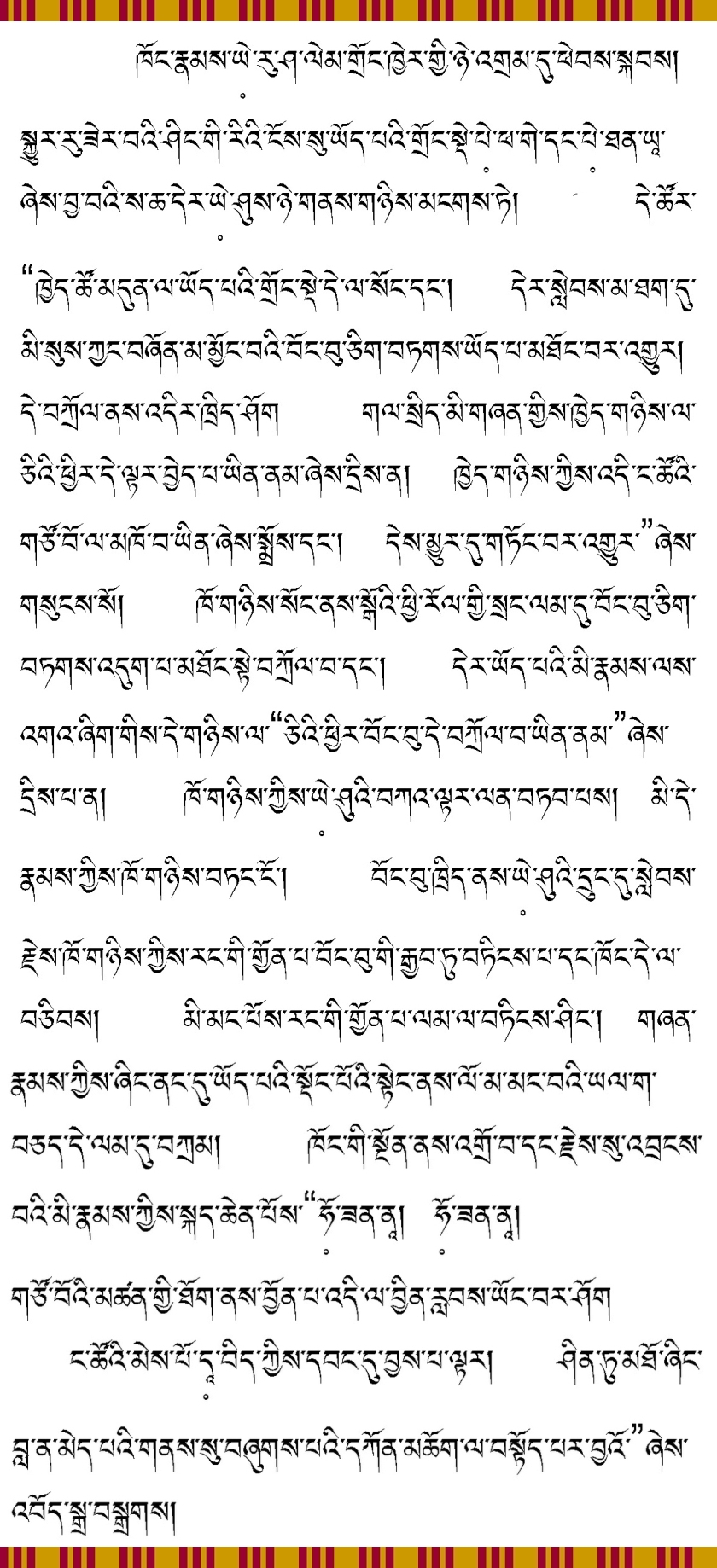
Now when they drew near to Jerusalem, to Bethphage and Bethany, at the Mount of Olives, Jesus sent two of his disciples and said to them, “Go into the village in front of you, and immediately as you enter it you will find a colt tied, on which no one has ever sat. Untie it and bring it. If anyone says to you, ‘Why are you doing this?’ say, ‘The Lord has need of it and will send it back here immediately.'” And they went away and and found a colt tied at a door outside in the street, and they untied it. And some of those standing there said to them, “What are you doing, untying the colt?” And they told them what Jesus had said, and they let them go. And they brought the colt to Jesus and threw their cloaks on it, and he sat on it. And many spread their cloaks on the road, and others spread leafy branches that they had cut from the fields. And those who went before and those who followed were shouting, “Hosanna! Blessed is he who comes in the name of the Lord! Blessed is the coming kingdom of our Father David! Hosanna in the highest!”

Jesus the king-to-be rides, not proudly on his winged horse, but on a borrowed, untrained young donkey, so as to make people understand his humble Messiahship.

However even so the crowds escort him jubilantly; he is the royal Messiah of Israel! It is like a great festival of victory.

But what to say? How little they understand. As the poet said, “The Saviour rides on to die.”

Tibetan Script Gospel Meditation – Mark 10:46-52

Mark 10.46-52 w B

Mark 10:46-52

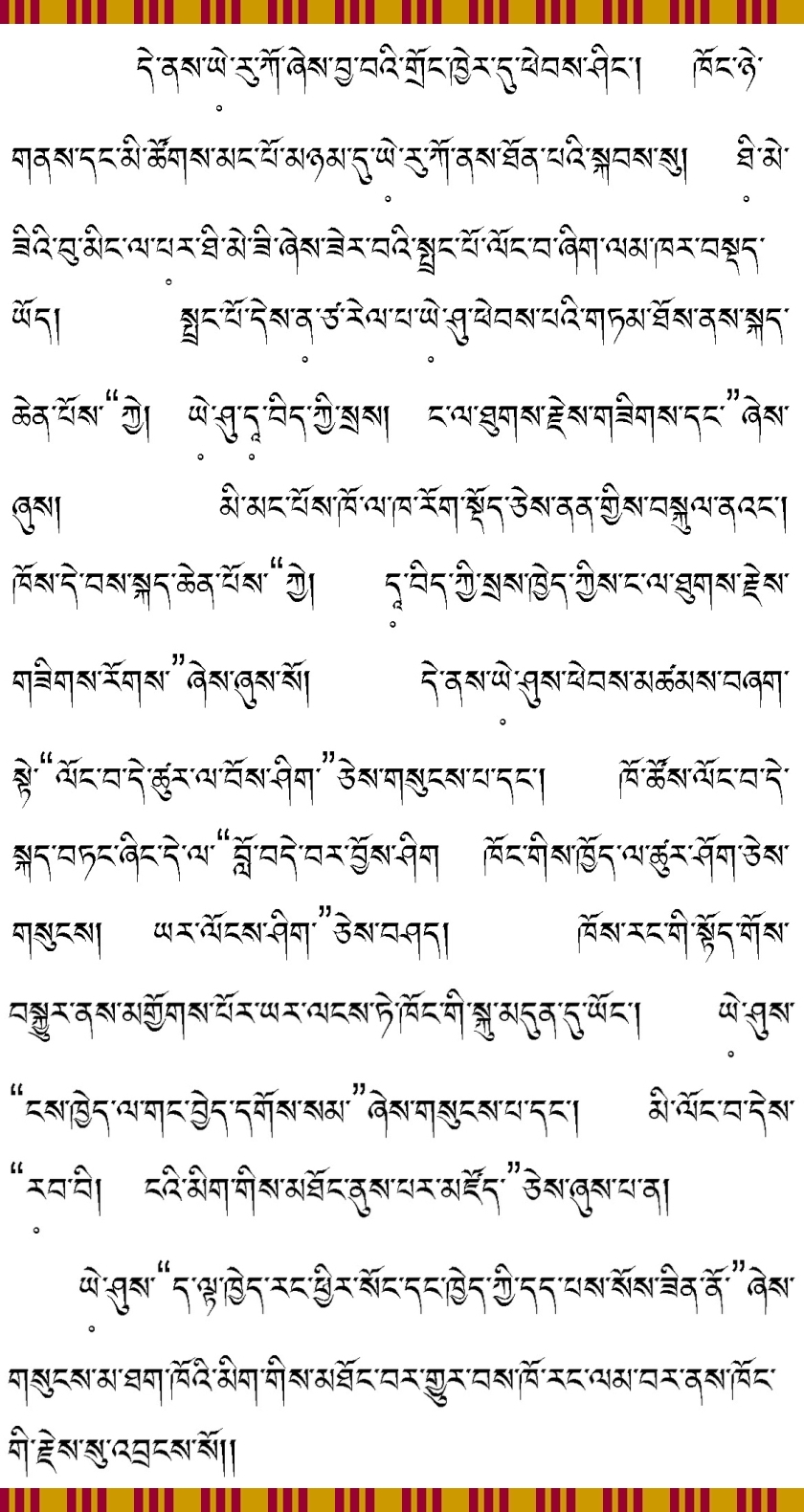
And they came to Jericho. And as he was leaving Jericho with his disciples and a great crowd, Bartimaeus, a blind beggar, the son of Timaeus, was sitting by the roadside. And when he heard that it was Jesus of Nazareth, he began to cry out and say, “Jesus, Son of David, have mercy on me!” And many rebuked him, telling him to be silent. But he cried out all the more, “Son of David, have mercy on me!” And Jesus stopped and said, “Call him.” And they called the blind man, saying to him, “Take heart. Get up; he is calling you.” And throwing off his cloak, he sprang up and came to Jesus. And Jesus said to him, “What do you want me to do for you?” And the blind man said to him, Rabbi, let me recover my sight.” And Jesus said to him, “Go your way; your faith has made you well.” And immediately he recovered his sight and followed him on the way.

The crowd of pilgrims comes to a stop because of the shouts of a helpless man who has heard that it is Yeshu the Nazaray-pa who is passing by. What did he think? ‘Did not the prophet say that Khirisitho would open eyes and release blind people from their prison of darkness? So why not me?’

Timaeus’ son is now the third person to whom Yeshu has addressed the five words, “Your faith has saved you.”