Tibetan Script Gospel Meditation – Mark 10:1-12

Mark 10.1-12 w B

Mark 10:1-12

And he left there and went to the region of Judea and beyond the Jordan, and crowds gathered to him again. And again, as was his custom, he taught them.

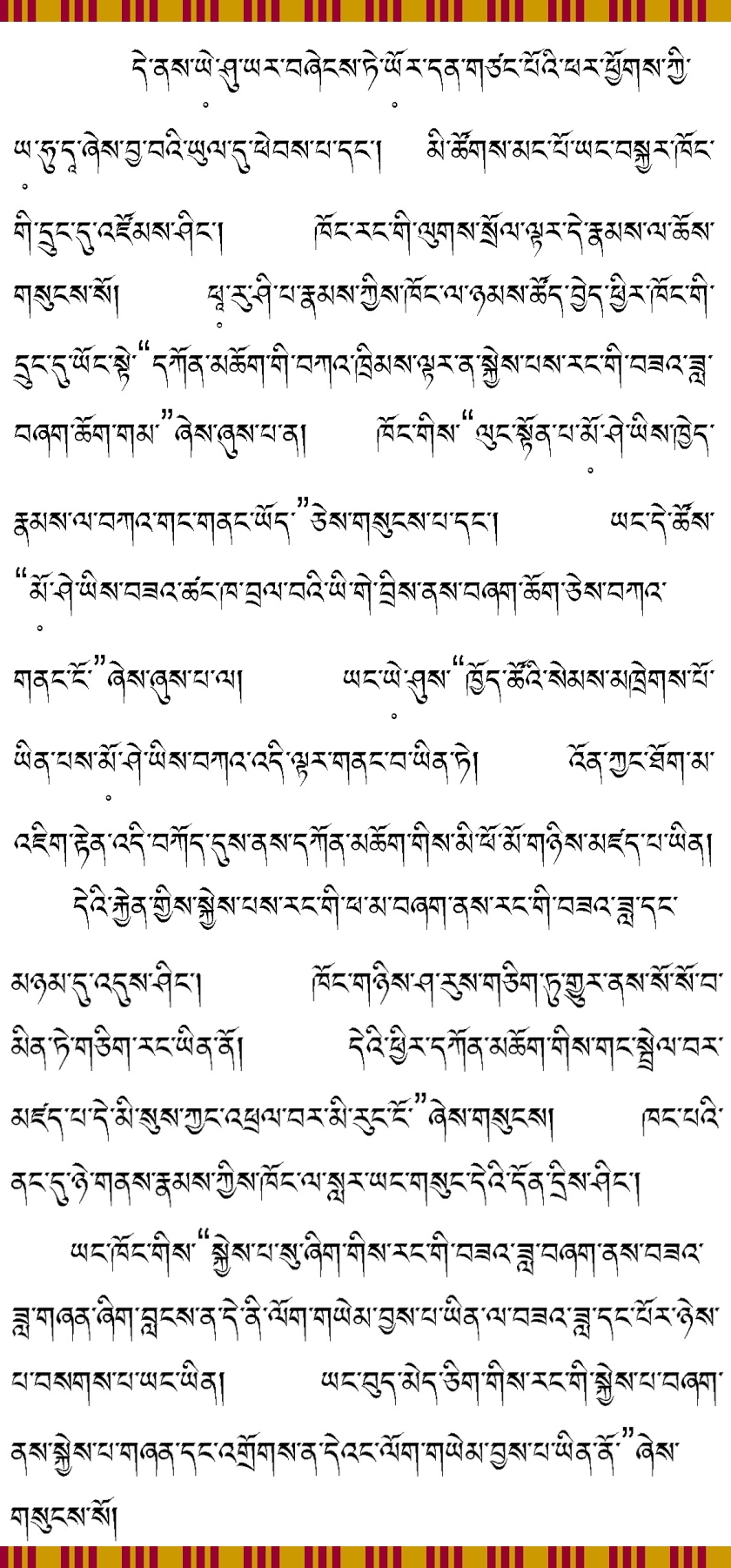
And Pharisees came up and in order to test him asked, “Is it lawful for a man to divorce his wife?” He answered them, “What did Moses command you?” They said, “Moses allowed a man to write a certificate of divorce and to send her away.” And Jesus said to them, “Because of your hardness of heart he wrote you this commandment. But from the beginning of creation, ‘God made them male and female.’ ‘Therefore a man shall leave his father and mother and hold fast to his wife, and the two shall become one flesh.’ So they are no longer two but one flesh. What therefore God has joined together let not man separate.”          

And in the house the disciples asked him again about this matter. And he said to them, ” Whoever divorces his wife and marries another commits adultery against her, and if she divorces her husband and marries another, she commits adultery.”

God made a man and a woman for each other to enjoy together a life of loyal union. If because of lack of love either is disloyal to the other, that is a sin before God. So in a country’s law a certificate of divorce is just a concession to the unhappy fact of human failure.

But remarriage after wilful divorce is definitely sinful and against God’s absolute will and purpose.

 

Tibetan Script Gospel Meditation – Mark 9:50

Mark 9.50 w B

Mark 9:50

“Salt is good, but if the salt has lost its saltiness, how will you make it salty again?  Have salt in yourselves, and be at peace with one another.”

Salt gives good taste. If the saltiness has disappeared from our lives, we are no longer any good as disciples.

But let’s take note that salt was not just used for flavour. Salt was given a meaning by Jews, just as it still is in countries from India to Arabia, namely that the salt shared during a meal was a sign that host and guest have contracted to a peace that must not be broken. So Yeshu urges, “Be salty in your relationship with people.”

Tibetan Script Gospel Meditation – Mark 9:49

Mark 9.49 w B

Mark 9:49

[ Jesus said ]  “For everyone will be salted with fire.”

Let’s find whether we can understand what Yeshu’s words might have meant to Jewish people:

When worshippers came to the Jewish gompa to make wheat-barley display offerings to the Lord God, the food had first to be salted, and then it was burned on the display altar, where the smoke of it rose up.

Yeshu seems to be saying that the disciples’ lives must be offered to God like a food offering.

As for the meaning of salt, in order to be pleasing to God their offered lives must be salty. God requires them to be right-minded towards Him, and He in turn will bless them. The salt is a sign that we agree to His contract with us.

As for the meaning of fire, it would suggest that to offer oneself to God as a disciple might be painful.

May Yeshu Himself by His Holy Spirit teach our hearts the meaning of these words.

,