
Source: www.kongkika.com licensed by Creative Commons Attribution-ShareAlike 4.0 International
ཁོང་གི་བཀའ།
ལེ་ཚན་དེས་དཀོན་མཆོག་གི་ལོ་རྒྱུས་བཤད་ཀྱི་རེད
Tibetan Bible བོད་ཀྱི་གསུང་རབ།
Source: www.kongkika.com licensed by Creative Commons Attribution-ShareAlike 4.0 International
ཁོང་གི་བཀའ།
ལེ་ཚན་དེས་དཀོན་མཆོག་གི་ལོ་རྒྱུས་བཤད་ཀྱི་རེད
Tibetan Bible བོད་ཀྱི་གསུང་རབ།
To Believe in Jesus – Part 12
John 3:31-36
31 He who comes from above is above all. He who is of the earth belongs to the earth and speaks in an earthly way. He who comes from heaven is above all. 32 He bears witness to what he has seen and heard, yet no one receives his testimony. 33 Whoever receives his testimony sets his seal to this, that God is true. 34 For he whom God has sent utters the words of God, for he gives the Spirit without measure. 35 The Father loves the Son and has given all things into his hand. 36 Whoever believes in the Son has eternal life; whoever does not obey the Son shall not see life, but the wrath of God remains on him.
John’s reference to “He who comes from above is above all” is referring to Jesus but why the specific identification and position “from above“? And this statement was repeated twice within the same verse!
John’s gospel opening sentences introduced Jesus as the Word of God and from above –
John 1:1 – In the beginning was the Word, and the Word was with God, and the Word was God.
John 1:14 – And the Word became flesh and dwelt among us, and we have seen his glory, glory as of the only Son from the Father, full of grace and truth.
John is being consistent in his presentation of Jesus the living Word of God coming from “above“, from THE higher authority of God to us for our redemption.
From the writings of old, the teachings and instructions of God had been clearly proclaimed as “from above” –
Deuteronomy 32:1-3
“Give ear, O heavens, and I will speak, and let the earth hear the words of my mouth.
2 May my teaching drop as the rain, my speech distill as the dew, like gentle rain upon the tender grass, and like showers upon the herb.
3 For I will proclaim the name of the Lord; ascribe greatness to our God!
Moses authorship with regards to the Pentateuch is highly creditable and he was tasked to teach God’s way of life to the people.
The Word of God from above speaks of supremacy and authority.
The Word of God from above commands respect and obedience.
Disobedience and rebellion against the Word of God invoke wrath and judgement of God. But blessing and growth awaits those who believe and obey.
The Word of God from above brings hope of salvation for those who will turn from their wicked ways and to return to the ways of God.
The Word of God from above has the power to redeem and restore those who are lost.
Therefore when and where God’s teachings were taught and proclaimed it follows the call for obedience to blessing or rejection to forfeiture of eternal life with God in His kingdom.
Isaiah 55:10-11
10 “For as the rain and the snow come down from heaven and do not return there but water the earth, making it bring forth and sprout, giving seed to the sower and bread to the eater,
11 so shall my word be that goes out from my mouth; it shall not return to me empty, but it shall accomplish that which I purpose, and shall succeed in the thing for which I sent it.
Isaiah speaks of the words of God as like rain from heaven that nourish vegetation and provided for Man’s survival. Likewise the Word of God from above regenerate new life for sinners who will turn back to God for good!
From the time of Adam when the first man sinned against God’s word the whole of human race had fallen into sin and condemnation but by the grace and mercy of God we can return to God’s way of obedience and blessed relationship through Jesus the Messiah chosen of God.
The whole chapter of Isaiah 55 do speaks of the Messiah and how Jesus will redeem and restore us to God and eternal life –
Isaiah 55
“Come, everyone who thirsts, come to the waters; and he who has no money, come, buy and eat! Come buy wine and milk without money and without price.
2 Why do you spend your money for that which is not bread? And your labor for that which does not satisfy? Listen diligently to me, and eat what is good, and delight yourselves in rich food.
3 Incline your ear, and come to me; hear, that your soul may live; and I will make with you an everlasting covenant, my steadfast, sure love for David.
4 Behold, I made him a witness to the peoples, a leader and commander for the peoples.
5 Behold, you shall call a nation that you do not know, and a nation that did not know you shall run to you, because of the Lord your God, and of the Holy One of Israel, for he has glorified you.
6 “Seek the Lord while he may be found; call upon him while he is near; 7 let the wicked forsake his way, and the unrighteous man his thoughts; let him return to the Lord, that he may have compassion on him, and to our God, for he will abundantly pardon.
8 For my thoughts are not your thoughts, neither are your ways my ways, declares the Lord.
9 For as the heavens are higher than the earth, so are my ways higher than your ways and my thoughts than your thoughts.
10 “For as the rain and the snow come down from heaven and do not return there but water the earth, making it bring forth and sprout, giving seed to the sower and bread to the eater, 11 so shall my word be that goes out from my mouth; it shall not return to me empty, but it shall accomplish that which I purpose, and shall succeed in the thing for which I sent it.
12 “For you shall go out in joy and be led forth in peace; the mountains and the hills before you shall break forth into singing, and all the trees of the field shall clap their hands.
13 Instead of the thorn shall come up the cypress; instead of the brier shall come up the myrtle; and it shall make a name for the Lord, an everlasting sign that shall not be cut off.”
The message of Isaiah 55 is consistent with John’s message and is speaking of Jesus the Messiah chosen of God to redeem us from sin and death and to set us on the path to eternal life –
Whoever believes in the Son has eternal life; whoever does not obey the Son shall not see life, but the wrath of God remains on him.
To believe in Jesus is to walk the path to eternal life with God in His kingdom.
To believe in Jesus is to turn away from the wrath of God.
David Z
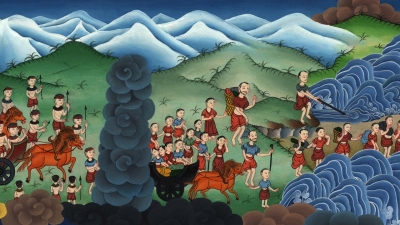
Source: www.kongkika.com licensed by Creative Commons Attribution-ShareAlike 4.0 International
ཁོང་གི་བཀའ།
ལེ་ཚན་དེས་དཀོན་མཆོག་གི་ལོ་རྒྱུས་བཤད་ཀྱི་རེད
Tibetan Bible བོད་ཀྱི་གསུང་རབ།
 The Life of Yeshu