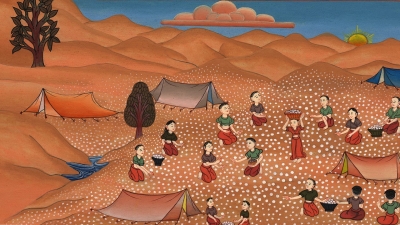
Source: www.kongkika.com licensed by Creative Commons Attribution-ShareAlike 4.0 International
ཁོང་གི་བཀའ།
ལེ་ཚན་དེས་དཀོན་མཆོག་གི་ལོ་རྒྱུས་བཤད་ཀྱི་རེད
Tibetan Bible བོད་ཀྱི་གསུང་རབ།
Source: www.kongkika.com licensed by Creative Commons Attribution-ShareAlike 4.0 International
ཁོང་གི་བཀའ།
ལེ་ཚན་དེས་དཀོན་མཆོག་གི་ལོ་རྒྱུས་བཤད་ཀྱི་རེད
Tibetan Bible བོད་ཀྱི་གསུང་རབ།
To Believe in Jesus – Part 14
John 4:5-10
5 So he (Jesus) came to a town of Samaria called Sychar, near the field that Jacob had given to his son Joseph. 6 Jacob’s well was there; so Jesus, wearied as he was from his journey, was sitting beside the well. It was about the sixth hour.
7 A woman from Samaria came to draw water. Jesus said to her, “Give me a drink.” 8 (For his disciples had gone away into the city to buy food.) 9 The Samaritan woman said to him, “How is it that you, a Jew, ask for a drink from me, a woman of Samaria?” (For Jews have no dealings with Samaritans.) 10 Jesus answered her, “If you knew the gift of God, and who it is that is saying to you, ‘Give me a drink,’ you would have asked him, and he would have given you living water.”
Living Water
Continuing on Jesus’ conversation with the woman at the well, the first mention of “living water” in the Gospel of John, and here we see another chapter of Jesus’ redemption ministry at work.
Jesus deliberately used the phrase “living water“ in His conversation and presented this “living water” as what the woman should ask for.
How would she perceive this offer of “living water”?
Jesus’ encounter with the woman at the well, John recorded the first mention of “living water” and later in John chapter 7 “living water“ is mentioned second time in the context of the Feast of Tabernacles.
The idea of “living water” had been presented since times of old when prophets of God called for repentance and to return to His ways and teachings.
Jeremiah 2:13
for my people have committed two evils: they have forsaken me, the fountain of living waters, and hewed out cisterns for themselves, broken cisterns that can hold no water.
In the records of the prophet Jeremiah, God presented Himself as “the fountain of living waters“ and what would that means to the nation of Israel when this message was delivered?
God who provided Redemption
Throughout the many messages from various prophets of old calling for Israel’s repentance there was that repeated reminder of how God delivered them from Egypt the house of bondage.
The same redemption as what we Christian today know as salvation and the bondage in Egypt what we could understand representing slavery to sin and death and no hope of eternal life.
So the message of Jeremiah 2:13 accused Israel of forsaking their redemption by rejecting their God who is “the fountain of living waters“! Means to say they were going back to sin and bondage, moving backward to the path of darkness and forsaking their hope of eternal life with God.
Jeremiah’s warning to the people of Israel was to turn them back to seek real redemption in God and to ensure their future eternal life with God.
Likewise Jesus’s offer of “living water” to the woman at the well is the offer of real redemption and salvation and hope of eternal life!
God the Source of Life and Full Blessing
God being “the fountain of living waters” also indicate being the source of life and full blessing of daily living.
For the people in the days of Jeremiah they should had understood the message reminding them it was God who protected them from their enemies and provided them bountiful harvest of the land that fed them and their families for good. But instead of being thankful to God who provided, they turn to idolatries, pagan worship, mixed religions, and eventually forgetting about God who delivered their forefathers from Egypt.
Jeremiah’s warning was issued in the backdrop of the Israelites practicing mixed religions with a stubborn attitude that eventually lead to their nation’s doom.
In the days of Jeremiah there were records of the people continuing worship at the Temple but at the same time participating in pagan worships! As the confusion and corruption carried on and became saturated throughout the land it came a point the children of Israel look to God as a stranger! No longer recognizing or even heard of this God who delivered their forefathers from Egypt the house of bondage. And so as they continued to ignore God’s warning through Jeremiah they eventually lost total defense against enemies forces and suffered such sever famine they committed horrifying acts of cannibalism for survival as recorded in Lamentations.
Jeremiah’s Lamentations recorded Israel’s darkest history.
The Jews were subjected to various foreign rules till Jesus came to show them the way to true eternal redemption. And the way back to God is to first recognize their God (Jehovah) being “the fountain of living waters” and to reject other forms of false gods.
So back in the Gospel of John, Jesus was offering the woman at the well not only redemption from sin and death but also to partake in the source of life, eternal life, and the full blessing of God.
The Samaritans Believed in Jesus!
Previous lesson we discussed about the ongoing estrangement of relationship between Jews and Samaritans, and the construction of Mount Gerizim temple, plus the Samaritans having their own version of the Pentateuch, all these had swayed their perspective of redemption until this encounter with Jesus!
Here we see Jesus acting in kindness and compassion, in reaching out to the Samaritans, to show them the truth, to bring them back to proper relationship with God.
The Gospel of John recorded the amazing fact of these Samaritans believing in Jesus so much so that perhaps Jesus’ disciples who were Jews were in dis-belief!
The Samaritans who believed in Jesus had become a classic case study of receiving redemption and eternal life!
To be continue ..
David Z

Source: www.kongkika.com licensed by Creative Commons Attribution-ShareAlike 4.0 International
ཁོང་གི་བཀའ།
ལེ་ཚན་དེས་དཀོན་མཆོག་གི་ལོ་རྒྱུས་བཤད་ཀྱི་རེད
Tibetan Bible བོད་ཀྱི་གསུང་རབ།
 The Life of Yeshu