The Acts of the Apostles – Acts 26:24-32 མཛད་པ། 26:24-32

(མཛད་པ། 26:24-32)

Acts 26.24-32 w B


And as he was saying these things in his defense, Festus said with a loud voice, “Paul, you are out of your mind; your great learning is driving you out of your mind.” But Paul said, “I am not out of my mind, most excellent Festus, but I am speaking true and rational words. For the king knows about these things, and to him I speak boldly. For I am persuaded that none of these things has escaped his notice, for this has not been done in a corner. King Agrippa, do you believe the prophets? I know that you believe.” And Agrippa said to Paul, “In a short time would you persuade me to be a Christian?” And Paul said, “Whether short or long, I would to God that not only you but also all who hear me this day might become such as I am—except for these chains.”

Then the king rose, and the governor and Bernice and those who were sitting with them. And when they had withdrawn, they said to one another, “This man is doing nothing to deserve death or imprisonment.” And Agrippa said to Festus, “This man could have been set free if he had not appealed to Caesar.” (Acts 26:24-32)


King Agrippa knew the Scriptures and Paul challenged him to believe. This was an opportunity also for Festus to understand better that Paul’s defence was based on the fact that the gospel he preached was firmly grounded in Scripture.

Although neither Festus nor Agrippa were led to belief, yet neither man thought Paul guilty of punishment. In this way there was fulfilled a promise of Jesus to his close disciples of both wisdom and safety from harm when giving their testimony before kings and governors (see Luke’s Gospel chapter 21 verse 12).

Next time we shall read Luke’s description of Paul’s journey to Rome.

The Acts of the Apostles – Acts 27:1-2 མཛད་པ། 27:1-12

(མཛད་པ། 27:1-12)

1 ངེད་རྣམས་གྲུ་གཟིངས་ལ་བསྡད་ནས་དབྱི་ཏ་ལི་ཡུལ་ལ་འགྲོ་བར་ཐག་གཅོད་བྱས་པའི་ཚེ། ཁོ་ཚོས་པའུ་ལུ་བཙོན་པ་གཞན་ཁ་ཅིག་དང་བཅས་པར་ཨུ་རྒ་ཟི་ཏུ་ཞེས་པའི་དམག་ཁག་གི་བརྒྱ་དཔོན་ཡུ་ལི་ཡུ་ཟེར་བ་ཞིག་གི་དབང་དུ་གཏད།

2 མ་ཀེ་དོན་ཡཱ་ཡུལ་གྱི་ཐེ་ས་ལོ་ནི་ཀེ་གྲོང་ཁྱེར་ནས་ཡིན་པའི་ཨ་རིས་ཐར་ཀུ་ང་ཚོ་དང་བཅས་པར། ཨེ་ཞེ་ཡཱ་ཞིང་ཆེན་གྱི་མཚོ་འགྲམ་བརྒྱུད་དེ་འགྲོ་བའི་ཨད་ར་མི་ཏི་གྲུ་ཁའི་གྲུ་གཟིངས་ལ་བསྡད་ནས་ཐོན།

3དེའི་ཕྱི་ཉིན་ཚི་དོན་གྲུ་ཁར་སླེབས་ནས་བརྒྱ་དཔོན་ཡུ་ལི་ཡུ་ཡིས་པའུ་ལུ་ལ་གཟིགས་སྐྱོང་གནང་སྟེ་གྲོགས་པོ་རྣམས་ཀྱིས་ཁོང་ལ་སྣེ་ལེན་བྱེད་པའི་ཆེད་དུ་ཁོ་ཚོའི་རྩར་ཕེབས་སུ་བཅུག

4 དེ་ནས་ངེད་རྣམས་གྲུ་གཟིངས་ལ་བསྡད་པ་དང༌། གྲུ་གཟིངས་ཀྱི་མདུན་ཕྱོགས་ནས་ལྷགས་པ་བརྒྱབ་པས་ཀིབ་རུ་གླིང་ཕྲན་གྱི་ལྷགས་པ་མེད་པའི་ཕྱོགས་སུ་ཕྱིན།

5 ཀི་ལིག་ཡཱ་དང་ཕམ་ཕིལ་ཡཱ་ཡུལ་གཉིས་ཀྱི་མཚོ་བརྒལ་ནས་ངེད་རྣམས་ལིག་ཡཱ་ཞིང་ཆེན་གྱི་གྲུ་ཁར་མུ་རཱ་ལ་སླེབས།

6 དེར་བརྒྱ་དཔོན་ལ་དབྱི་ཏ་ལི་ཡུལ་ལ་འགྲོ་བའི་ཨ་ལིག་ཟན་དྲི་ཡཱ་གྲོང་ཁྱེར་ནས་ཡོང་བའི་གྲུ་གཟིངས་ཤིག་རྙེད་པ་དང༌། ངེད་རྣམས་དེའི་ནང་བཅུག

7 ངེད་རྣམས་གྲུ་གཟིངས་ལ་ཉི་མ་མང་པོ་འགོར་ཞིང་དཀའ་ངལ་ཆེན་པོ་བྱུང་སྟེ་གཞི་ནས་ནི་དུ་ཞེས་པའི་གྲོང་ཁྱེར་གྱི་ཉེ་འཁོར་དུ་སླེབས། རླུང་གིས་བཀག་རྒྱ་ཐེབས་ཏེ་མདུན་དུ་འགྲོ་མ་ཐུབ་པས། ཀེ་རེ་ཊེ་གླིང་ཕྲན་གྱི་སྣེ་མོ་སལ་མོ་ནཱེ་བར་དུ་ལྷགས་པ་མེད་པའི་ཕྱོགས་སུ་ཕྱིན།

8 ང་ཚོ་དཀའ་ཚེགས་ཆེན་པོའི་སྒོ་ནས་མཚོ་འགྲམ་བརྒྱུད་དེ་ལ་སེ་ཡཱ་གྲོང་ཁྱེར་དང་ཉེ་བའི་གྲུ་ཁ་བདེ་ཅན་ཞེས་བྱ་བའི་ས་ཆར་སླེབས།

9 ལམ་བར་དུ་དུས་ཚོད་མང་པོ་འགོར་བ་དང༌། གྲུ་གཟིངས་ལ་བསྡད་དེ་བསྐྱོད་པའི་ཉེན་ཁ་ཆེ་བ། དེ་བཞིན་སྨྱུང་གནས་སྲུང་བའི་དུས་ཆེན་ཚར་ཟིན་པས་པའུ་ལུས་ཁོ་ཚོར་བསྐུལ་ཏེ་

10 “སྐུ་ཞབས་རྣམས། ཆུ་ཐོག་གི་འགྲུལ་བཞུད་འདི་ནི་གྲུ་གཟིངས་དང་དོས་པོ་ལ་གཏོར་བཤིག་ཐེབས་པ་དང༌། ངེད་རྣམས་ཀྱི་སྲོག་ལའང་ཉེན་ཁ་ཆེན་པོ་ཡོད་པར་ངས་ཤེས་” ཞེས་གསུངས།

11 འོན་ཀྱང་བརྒྱ་དཔོན་དེས་པའུ་ལུས་གང་གསུངས་པ་ལས་གྲུ་དཔོན་དང་གྲུ་གཟིངས་ཀྱི་བདག་པོ་གཉིས་ཀྱིས་གང་བཤད་པ་ལ་དོ་སྣང་བྱས།

12 དགུན་ཁར་གྲུ་ཁ་དེ་སྡོད་པར་མི་བདེ་བས་མི་མང་ཆེ་བས་ཕར་འགྲོ་བར་ཐག་གཅོད་བྱས། ཁོ་ཚོས་ཕེ་ནི་ཀཱེ་ལ་སླེབས་ནས་དེ་ལ་དགུན་ཁ་སྡོད་པར་རེ་བ་བྱས། ས་ཆ་དེ་ནི་ཀེ་རེ་ཊེ་གླིང་ཕྲན་གྱི་མཚོ་ཁ་ཞིག་ཡིན་ཏེ་ལྷོ་ནུབ་དང་ནུབ་བྱང་ལ་ཁ་ཕྱོགས་ཡོད།

རླུང་འཚུབ་ཆེན་པོ་ལངས་པ།


T script 7 x 600px


And when it was decided that we should sail for Italy, they delivered Paul and some other prisoners to a centurion of the Augustan Cohort named Julius. 2 And embarking in a ship of Adramyttium, which was about to sail to the ports along the coast of Asia, we put to sea, accompanied by Aristarchus, a Macedonian from Thessalonica. 3 The next day we put in at Sidon. And Julius treated Paul kindly and gave him leave to go to his friends and be cared for. 4 And putting out to sea from there we sailed under the lee of Cyprus, because the winds were against us. 5 And when we had sailed across the open sea along the coast of Cilicia and Pamphylia, we came to Myra in Lycia. 6 There the centurion found a ship of Alexandria sailing for Italy and put us on board. 7 We sailed slowly for a number of days and arrived with difficulty off Cnidus, and as the wind did not allow us to go farther, we sailed under the lee of Crete off Salmone. 8 Coasting along it with difficulty, we came to a place called Fair Havens, near which was the city of Lasea.

9 Since much time had passed, and the voyage was now dangerous because even the Fast was already over, Paul advised them, 10 saying, “Sirs, I perceive that the voyage will be with injury and much loss, not only of the cargo and the ship, but also of our lives.” 11 But the centurion paid more attention to the pilot and to the owner of the ship than to what Paul said. 12 And because the harbor was not suitable to spend the winter in, the majority decided to put out to sea from there, on the chance that somehow they could reach Phoenix, a harbor of Crete, facing both southwest and northwest, and spend the winter there. (Acts 27:1-12)


Acts 27:1-12  The Journey to Rome, Part I

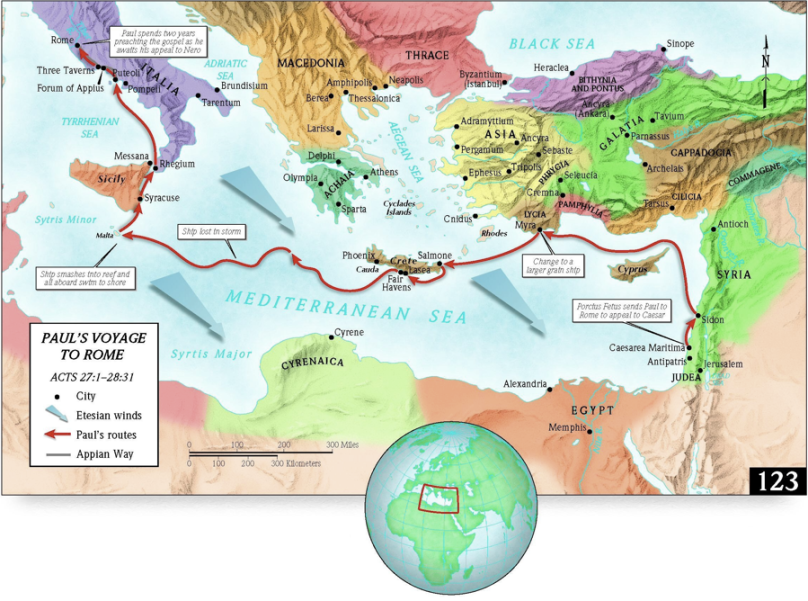
The conditions for Paul’s sea voyage across the Mediterranean (see map), including the weather and seasons, are the same today as they were in his time.

They made very slow progress. So then, as Paul pointed out, after the date of the Jewish Yom Kippur Fast it was risky for the sailing boats of that era to attempt to put to sea at all. His words were common sense, but they also contained prophecy of the harm that would come to them.

Read on.

Map 123

The Acts of the Apostles – Acts 27:13-32 མཛད་པ། 27:13-32

(མཛད་པ། 27:13-32)

Acts 27.13-32 w B


Now when the south wind blew gently, supposing that they had obtained their purpose, they weighed anchor and sailed along Crete, close to the shore.  But soon a tempestuous wind, called the northeaster, struck down from the land. And when the ship was caught and could not face the wind, we gave way to it and were driven along. Running under the lee of a small island called Cauda, we managed with difficulty to secure the ship’s boat. After hoisting it up, they used supports to undergird the ship. Then, fearing that they would run aground on the Syrtis, they lowered the gear, and thus they were driven along. Since we were violently storm-tossed, they began the next day to jettison the cargo. And on the third day they threw the ship’s tackle overboard with their own hands. When neither sun nor stars appeared for many days, and no small tempest lay on us, all hope of our being saved was at last abandoned.

Since they had been without food for a long time, Paul stood up among them and said, “Men, you should have listened to me and not have set sail from Crete and incurred this injury and loss. Yet now I urge you to take heart, for there will be no loss of life among you, but only of the ship. For this very night there stood before me an angel of the God to whom I belong and whom I worship, and he said, ‘Do not be afraid, Paul; you must stand before Caesar. And behold, God has granted you all those who sail with you.’ So take heart, men, for I have faith in God that it will be exactly as I have been told. But we must run aground on some island.”

When the fourteenth night had come, as we were being driven across the Adriatic Sea, about midnight the sailors suspected that they were nearing land. So they took a sounding and found twenty fathoms.  A little farther on they took a sounding again and found fifteen fathoms. And fearing that we might run on the rocks, they let down four anchors from the stern and prayed for day to come. And as the sailors were seeking to escape from the ship, and had lowered the ship’s boat into the sea under pretense of laying out anchors from the bow, Paul said to the centurion and the soldiers, “Unless these men stay in the ship, you cannot be saved.” Then the soldiers cut away the ropes of the ship’s boat and let it go. (Acts 27:13-32)


T script 7 x 600px


The Two-Week Storm at Sea

It was a large ship with a valuable cargo of the wheat from the fields of Egypt needed for feeding Rome’s large population.

But soon this sailing vessel was being driven by the storm and helpless. First the sailors strength-ened it by lashing it with ropes. Then fearing being wrecked on the shoals of Syrtis (see map), the mainsail was lowered so as not to go so fast. And to avoid being swamped by the waves some of the wheat, and then even the spare heavy sailing gear, was thrown overboard.

However Paul was in the safe hands of God, who gave him prophetic words of encouragement for everyone.

Read on to find out what eventually happened.

Map 123