
The Acts of the Apostles – Acts 11:19-26 མཛད་པ། 11:19-26

(མཛད་པ། 11:19-26)

acts-11-19-26-w-b

israel-n-middle-east-003

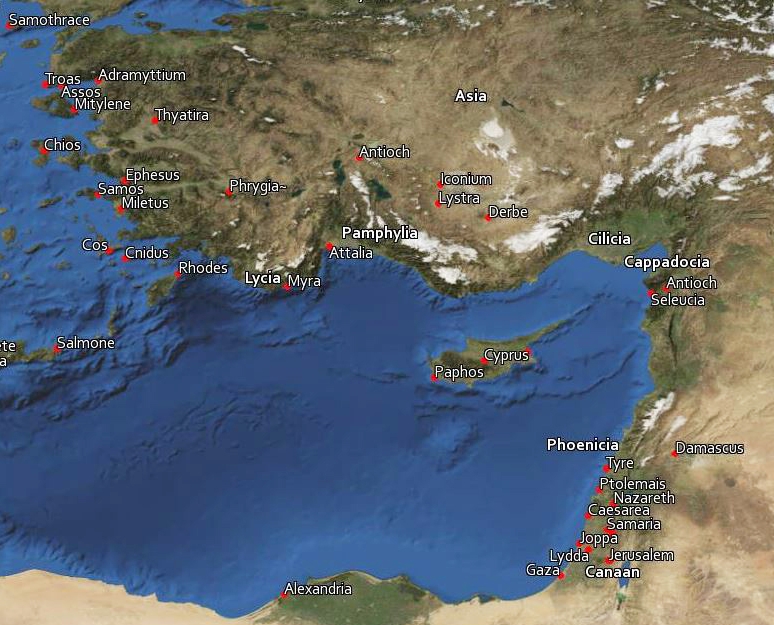
Now those who were scattered because of the persecution that arose over Stephen traveled as far as Phoenicia and Cyprus and Antioch, speaking the word to no one except Jews. But there were some of them, men of Cyprus and Cyrene, who on coming to Antioch spoke to the Hellenists also, preaching the Lord Jesus. And the hand of the Lord was with them, and a great number who believed turned to the Lord. The report of this came to the ears of the church in Jerusalem, and they sent Barnabas to Antioch. When he came and saw the grace of God, he was glad, and he exhorted them all to remain faithful to the Lord with steadfast purpose, for he was a good man, full of the Holy Spirit and of faith. And a great many people were added to the Lord. So Barnabas went to Tarsus to look for Saul, and when he had found him, he brought him to Antioch. For a whole year they met with the church and taught a great many people. And in Antioch the disciples were first called Christians. (Acts 11:19-26)


Many people from a different cultural background in Antioch the capital of the province of Syria  were now coming to faith in Yeshu.

As a result, perhaps as a Greek nickname spreading around in the large city, believers were being called Christians ( khi r’i’ si tho pa ) , meaning Messiah-men (ma shi ga pa) .

They were people of the Way, those who had chosen the short way of salvation (thar pa’ lam ) through the Saviour Yeshu who had said, “I am the Way”. They were Yeshu-men ( ye shu pa ).


The Acts of the Apostles – Acts 11:27-30 མཛད་པ། 11:27-30

(མཛད་པ། 11:27-30)

acts-11-27-30-w-b


Now in these days prophets came down from Jerusalem to Antioch. And one of them named Agabus stood up and foretold by the Spirit that there would be a great famine over all the world (this took place in the days of Claudius). So the disciples determined, every one according to his ability, to send relief to the brothers living in Judea. 30 And they did so, sending it to the elders by the hand of Barnabas and Saul. (Acts 11:27-30)


Because of the prophecy it was possible for the believers in Antioch to save up money in advance for the relief of the coming famine in Judea.

God commands us to love one another. This prophecy shows us one way in which God will help believers who want to serve each other.

The Acts of the Apostles – Acts 12:1-5 མཛད་པ། 12:1-5

(མཛད་པ། 12:1-5)

acts-12-1-5-w-b


About that time Herod the king laid violent hands on some who belonged to the church. He killed James the brother of John with the sword, and when he saw that it pleased the Jews, he proceeded to arrest Peter also. This was during the days of Unleavened Bread. And when he had seized him, he put him in prison, delivering him over to four squads of soldiers to guard him, intending after the Passover to bring him out to the people. So Peter was kept in prison, but earnest prayer for him was made to God by the church. (Acts 12:1-5)


Herod Agrippa I was a puppet king whom the Romans had appointed to rule the province of Judea. He was not of pure Jewish descent, and was neither godly nor popular.

He was planning, when the great festival was over, to please the people by holding a public trial of Peter.

Read on to find how the prayers for Peter were answered by God who is stronger than iron chains and prison guards.