The Acts of the Apostles – Acts 16:6-10 མཛད་པ། 16:6-10

(མཛད་པ། 16:6-10)

acts-16-6-10-w-b


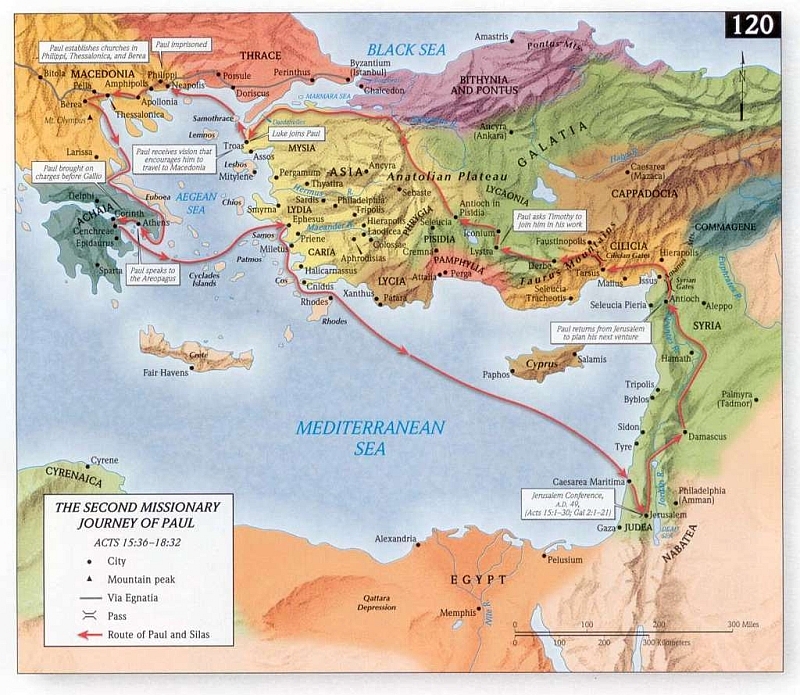
And they went through the region of Phrygia and Galatia, having been forbidden by the Holy Spirit to speak the word in Asia. And when they had come up to Mysia, they attempted to go into Bithynia, but the Spirit of Jesus did not allow them. So, passing by Mysia, they went down to Troas. And a vision appeared to Paul in the night: a man of Macedonia was standing there, urging him and saying, “Come over to Macedonia and help us.” And when Paul had seen the vision, immediately we sought to go on into Macedonia, concluding that God had called us to preach the gospel to them. (Acts 16:6-10)


It seemed good to Paul and Silas to continue going west so as to preach the gospel in Asia (The whole western part of the country that is Turkey today was the Roman province of Asia). But they faced a ‘No Entry’ sign; we do not know how God’s Holy Spirit spoke to them.

So they set off on the long northward journey to the province of Bithynia. Again Jesus said ‘No’ to them in some manner. And so without stopping anywhere they made the long journey westward down to Troas. Where to go next? And there God gave them directions, using the vision of a man calling ‘Come, help us’.

As a result they made plans to cross the sea to Europe (See map posted last week). God’s obedient servants will know his guidance.
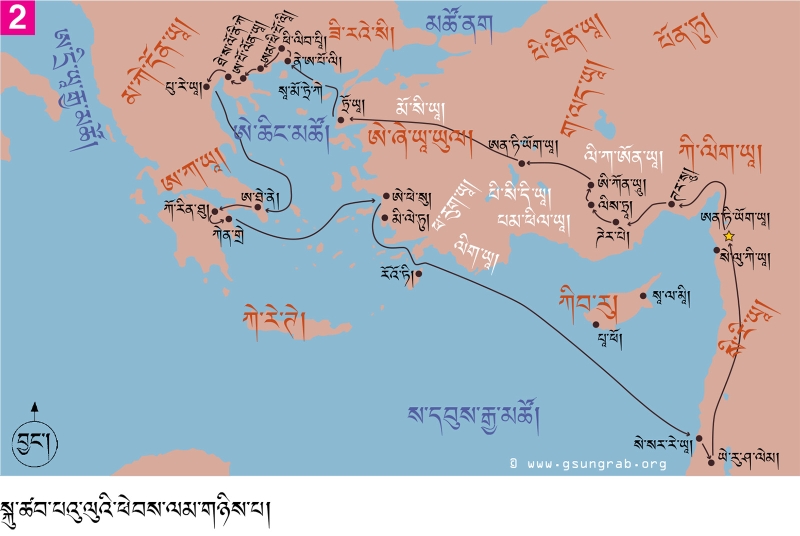
acts-002-paul-2nd-journey-800-px

paul-2nd-journey-120-800px

The Acts of the Apostles – Acts 16:11-15 མཛད་པ། 16:11-15

(མཛད་པ། 16:11-15)

acts-16-11-15-w-b


So, setting sail from Troas, we made a direct voyage to Samothrace, and the following day to Neapolis, and from there to Philippi, which is a leading city of the[d] district of Macedonia and a Roman colony. We remained in this city some days. And on the Sabbath day we went outside the gate to the riverside, where we supposed there was a place of prayer, and we sat down and spoke to the women who had come together. One who heard us was a woman named Lydia, from the city of Thyatira, a seller of purple goods, who was a worshiper of God. The Lord opened her heart to pay attention to what was said by Paul. And after she was baptized, and her household as well, she urged us, saying, “If you have judged me to be faithful to the Lord, come to my house and stay.” And she prevailed upon us. (Acts 16:11-15)


Philippi was a colony for retired Roman soldiers, and ruled by them; so, in that sense, it really was autonomous. Any Jews, and other believers in Almighty God, were only allowed to meet for worship outside the city. It was there on the holy day that Paul, Silas and Luke found a meeting place where they told the good news of the Saviour Jesus Christ to the women who gathered.

There God spoke to one of them through Paul’s words. She was a business lady called Lydia, who sold the purple-dyed cloth for which her native region was famous.

It was in this way that a church would come into being. But before that happened there would be trouble. Read on to learn what happened next.

The Acts of the Apostles – Acts 16:16-24 མཛད་པ། 16:16-24

(མཛད་པ། 16:16-24)

Acts 16.16-24 w B


As we were going to the place of prayer, we were met by a slave girl who had a spirit of divination and brought her owners much gain by fortune-telling. She followed Paul and us, crying out, “These men are servants of the Most High God, who proclaim to you the way of salvation.” And this she kept doing for many days. Paul, having become greatly annoyed, turned and said to the spirit, “I command you in the name of Jesus Christ to come out of her.” And it came out that very hour.

But when her owners saw that their hope of gain was gone, they seized Paul and Silas and dragged them into the marketplace before the rulers. And when they had brought them to the magistrates, they said, “These men are Jews, and they are disturbing our city. They advocate customs that are not lawful for us as Romans to accept or practice.” The crowd joined in attacking them, and the magistrates tore the garments off them and gave orders to beat them with rods. And when they had inflicted many blows upon them, they threw them into prison, ordering the jailer to keep them safely. Having received this order, he put them into the inner prison and fastened their feet in the stocks. (Acts 16:16-24)


What the evil spirit knew, that – perhaps – the girl also knew. Remember how evil spirits cried out in fear when they met the Lord Jesus Christ, Son of the supreme High God (See Mark’s Gospel, chapter 1 and verses 24 & 34). Jesus was the powerful One whom Paul, Silas and Luke served; the spirit must obey him.

However the girl’s owners did not know the power and authority of that High God who could and would save Paul and Silas from the prison. Read the rest of the story next time.