The Acts of the Apostles – Acts 2:1-13 མཛད་པ། 2:1-13

(མཛད་པ། 2:1-13)

Acts 2.1-13 w B


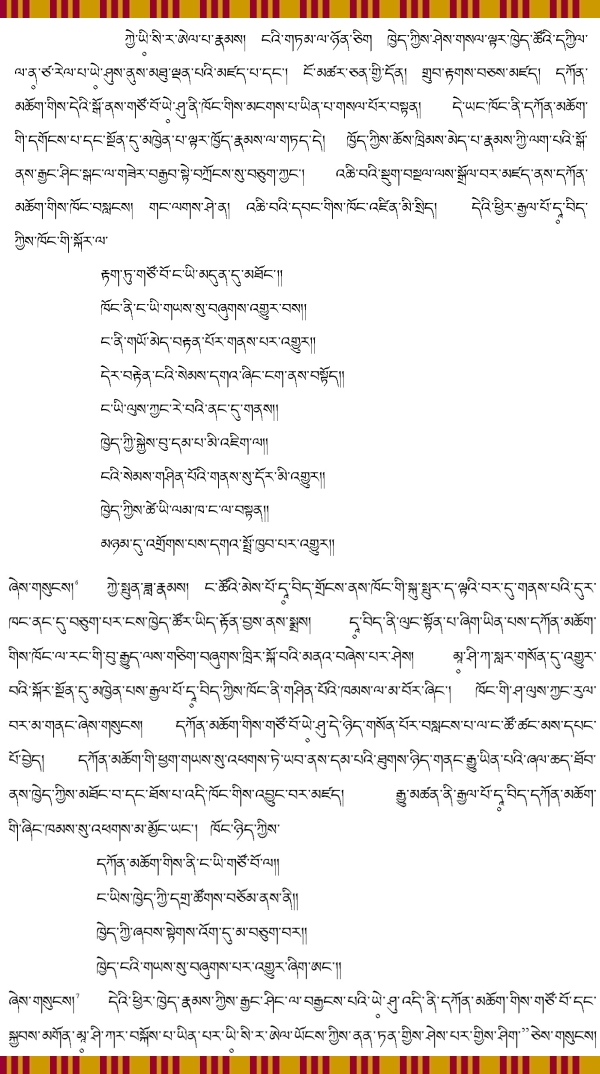
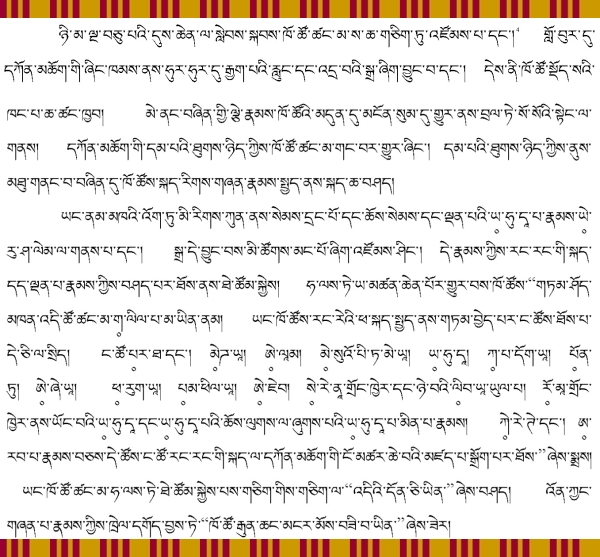
When the day of Pentecost arrived, they were all together in one place. 2 And suddenly there came from heaven a sound like a mighty rushing wind, and it filled the entire house where they were sitting. 3 And divided tongues as of fire appeared to them and rested[a] on each one of them. 4 And they were all filled with the Holy Spirit and began to speak in other tongues as the Spirit gave them utterance.

5 Now there were dwelling in Jerusalem Jews, devout men from every nation under heaven. 6 And at this sound the multitude came together, and they were bewildered, because each one was hearing them speak in his own language. 7 And they were amazed and astonished, saying, “Are not all these who are speaking Galileans? 8 And how is it that we hear, each of us in his own native language? 9 Parthians and Medes and Elamites and residents of Mesopotamia, Judea and Cappadocia, Pontus and Asia, 10 Phrygia and Pamphylia, Egypt and the parts of Libya belonging to Cyrene, and visitors from Rome, 11 both Jews and proselytes, Cretans and Arabians—we hear them telling in our own tongues the mighty works of God.” 12 And all were amazed and perplexed, saying to one another, “What does this mean?” 13 But others mocking said, “They are filled with new wine.”


Yeshu’s promise fulfilled! What a memory! a sound like hurricane wind in the house, and the Spirit coming down a bit like forked lightning to fill each man. And to these simple country folk was given the power of speech to praise God. And what speech!

It seems that they burst out of the house; and so loud was the noise of 120 men speaking that a huge crowd was attracted  and among them people coming from countries as far as Rome to the west, Iran to the east, Arabia in the south, and from North Africa. What they heard was the praise of God spoken in their local languages.

But some not understanding at all thought the disciples were just drunk!
The Acts of the Apostles – Acts 2:14-21 མཛད་པ། 2:14-21

(མཛད་པ། 2:14-21)

Acts 2.14-21 w B


But Peter, standing with the eleven, lifted up his voice and addressed them: “Men of Judea and all who dwell in Jerusalem, let this be known to you, and give ear to my words. For these people are not drunk, as you suppose, since it is only the third hour of the day. But this is what was uttered through the prophet Joel:

“‘And in the last days it shall be, God declares,
that I will pour out my Spirit on all flesh,
and your sons and your daughters shall prophesy,
and your young men shall see visions,
and your old men shall dream dreams;
even on my male servants and female servants
in those days I will pour out my Spirit, and they shall prophesy.
And I will show wonders in the heavens above
and signs on the earth below,
blood, and fire, and vapor of smoke;
the sun shall be turned to darkness
and the moon to blood,
before the day of the Lord comes, the great and magnificent day.
And it shall come to pass that everyone who calls upon the name of the Lord shall be saved.’


So Peter is now made to stand in front of the great crowd, and he speaks out boldly. This loud announcement of God’s great works in all your languages, he says, is just as Joel’s prophecy described:

1. These are the ‘last days’ of which he wrote

2. You heard ‘God’s Spirit’ giving the power of speech

3. It is not only prophets who will ‘prophesy’, but those who are ‘God’s bond-servants, both male and female’.

Then Peter continues to quote, because Joel’s sutra also says that, now ‘before’ the Last Day, the day of judgment for sin, that ‘magnificent day of the Lord’, ‘everyone’ who believes and ‘calls upon’ God will achieve liberation.

The Acts of the Apostles – Acts 2:22-36 མཛད་པ། 2:22-36

(མཛད་པ། 2:22-36)

Acts 2.22-36 w B


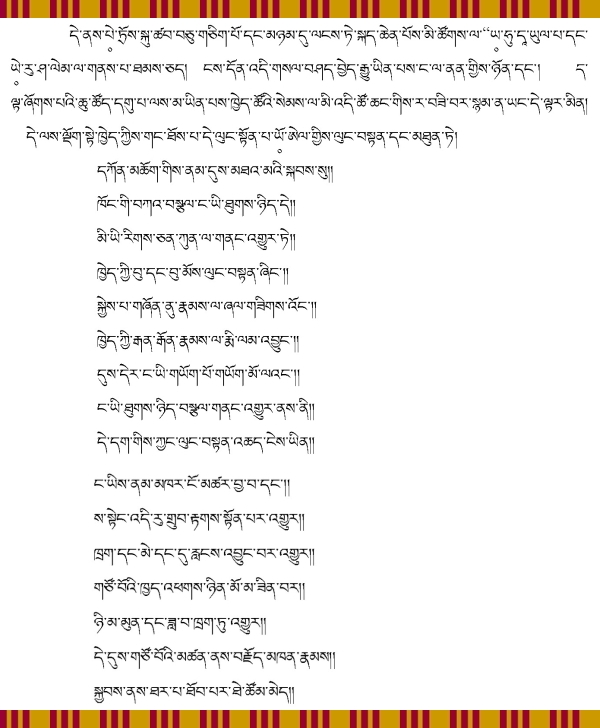
22 “Men of Israel, hear these words: Jesus of Nazareth, a man attested to you by God with mighty works and wonders and signs that God did through him in your midst, as you yourselves know— 23 this Jesus,[d] delivered up according to the definite plan and foreknowledge of God, you crucified and killed by the hands of lawless men. 24 God raised him up, loosing the pangs of death, because it was not possible for him to be held by it. 25 For David says concerning him,

“‘I saw the Lord always before me, for he is at my right hand that I may not be shaken;

26 therefore my heart was glad, and my tongue rejoiced; my flesh also will dwell in hope.

27 For you will not abandon my soul to Hades, or let your Holy One see corruption.

28 You have made known to me the paths of life; you will make me full of gladness with your presence.’

29 “Brothers, I may say to you with confidence about the patriarch David that he both died and was buried, and his tomb is with us to this day. 30 Being therefore a prophet, and knowing that God had sworn with an oath to him that he would set one of his descendants on his throne, 31 he foresaw and spoke about the resurrection of the Christ, that he was not abandoned to Hades, nor did his flesh see corruption. 32 This Jesus God raised up, and of that we all are witnesses. 33 Being therefore exalted at the right hand of God, and having received from the Father the promise of the Holy Spirit, he has poured out this that you yourselves are seeing and hearing. 34 For David did not ascend into the heavens, but he himself says,

“‘The Lord said to my Lord, “Sit at my right hand, 35 until I make your enemies your footstool.”’

36 Let all the house of Israel therefore know for certain that God has made him both Lord and Christ, this Jesus whom you crucified.” Acts 2:22-36


Having shown that the loud speech was fulfilment of a prophecy about the giving of the Holy Spirit, Peter now gives the reason for it happening: It is what God promised. Men killed Yeshu Messiah, but God the Father raised him, and has given Yeshu the Holy Spirit; which he has now bestowed liberally on his believers, as you are now seeing and hearing.

The two sutras show that Messiah Christ must both live again, and reign in heaven.

In the first sutra King David hears and uses words prophetically which only Yeshu himself could speak, ‘You, Lord God, are with me always; you will not let me, your Holy Messiah, die and decay, but will give me life.’   In the second sutra, David hears the Lord (God) speaking to David’s Lord (Messiah Christ}, ‘Come and share my throne.’