The Acts of the Apostles – Acts 6:8-15 མཛད་པ། 6:8-15

(མཛད་པ། 6:8-15)

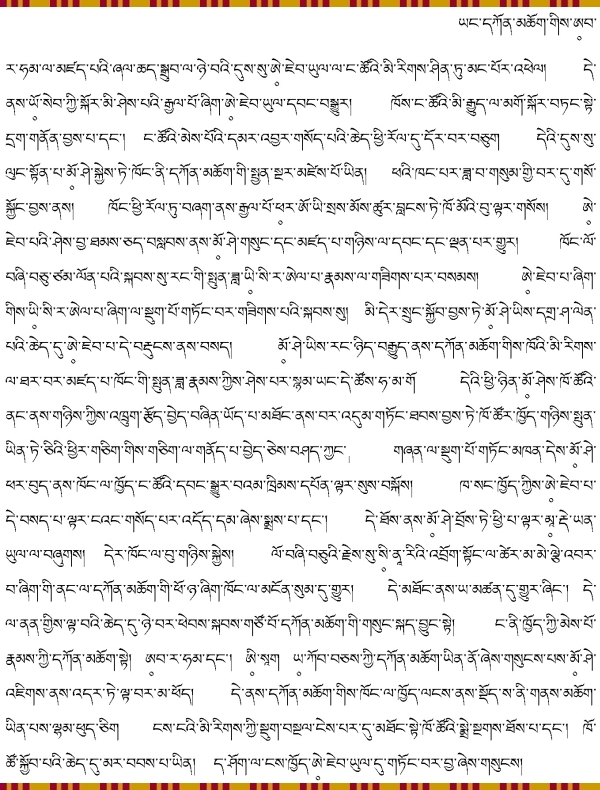
Acts 6.8 - 15 w B


8 And Stephen, full of grace and power, was doing great wonders and signs among the people. 9 Then some of those who belonged to the synagogue of the Freedmen (as it was called), and of the Cyrenians, and of the Alexandrians, and of those from Cilicia and Asia, rose up and disputed with Stephen. 10 But they could not withstand the wisdom and the Spirit with which he was speaking. 11 Then they secretly instigated men who said, “We have heard him speak blasphemous words against Moses and God.” 12 And they stirred up the people and the elders and the scribes, and they came upon him and seized him and brought him before the council, 13 and they set up false witnesses who said, “This man never ceases to speak words against this holy place and the law, 14 for we have heard him say that this Jesus of Nazareth will destroy this place and will change the customs that Moses delivered to us.” 15 And gazing at him, all who sat in the council saw that his face was like the face of an angel. (Acts 6:8-15)


One of the new administrators, Stephen, could also speak effectively in debate. But because they could not beat him, this angered the Jews of certain groups. So they planned a false charge against Stephen of blasphemy against Moses and God, by accusing him of saying that Yeshu would destroy the temple and sangha.

Read on to find how God’s Holy Spirit would help Stephen to give answer to these charges.

*****************

Stephen gave a long speech. In it he shows himself innocent of blasphemy against God, and then what is his real attitude to the holy place ( gnasmchok ), the law ( khrimssrol ), and to Moses. We will treat his speech in five sections.
 

The Acts of the Apostles – Acts 7:1-16 མཛད་པ། 7:1-16

(མཛད་པ། 7:1-16)

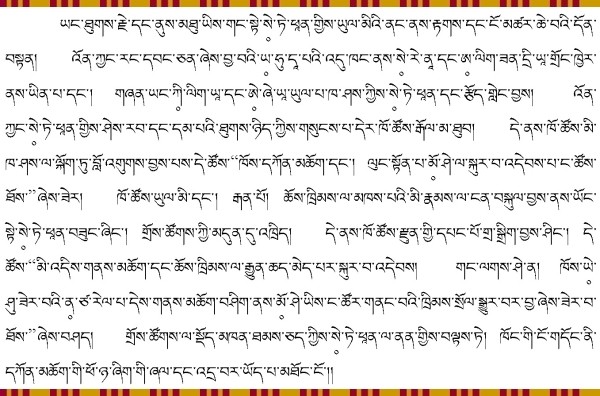
Acts 7.1 - 16 w B


And the high priest said, “Are these things so?” 2 And Stephen said: “Brothers and fathers, hear me. The God of glory appeared to our father Abraham when he was in Mesopotamia, before he lived in Haran, 3 and said to him, ‘Go out from your land and from your kindred and go into the land that I will show you.’ 4 Then he went out from the land of the Chaldeans and lived in Haran. And after his father died, God removed him from there into this land in which you are now living. 5 Yet he gave him no inheritance in it, not even a foot’s length, but promised to give it to him as a possession and to his offspring after him, though he had no child. 6 And God spoke to this effect—that his offspring would be sojourners in a land belonging to others, who would enslave them and afflict them four hundred years. 7 ‘But I will judge the nation that they serve,’ said God, ‘and after that they shall come out and worship me in this place.’ 8 And he gave him the covenant of circumcision. And so Abraham became the father of Isaac, and circumcised him on the eighth day, and Isaac became the father of Jacob, and Jacob of the twelve patriarchs.

9 “And the patriarchs, jealous of Joseph, sold him into Egypt; but God was with him 10 and rescued him out of all his afflictions and gave him favor and wisdom before Pharaoh, king of Egypt, who made him ruler over Egypt and over all his household. 11 Now there came a famine throughout all Egypt and Canaan, and great affliction, and our fathers could find no food. 12 But when Jacob heard that there was grain in Egypt, he sent out our fathers on their first visit. 13 And on the second visit Joseph made himself known to his brothers, and Joseph’s family became known to Pharaoh. 14 And Joseph sent and summoned Jacob his father and all his kindred, seventy-five persons in all. 15 And Jacob went down into Egypt, and he died, he and our fathers, 16 and they were carried back to Shechem and laid in the tomb that Abraham had bought for a sum of silver from the sons of Hamor in Shechem.

(Acts 7:1-16)


History of Israel

1. Story of the Fathers

The council listened attentively to the long story. They loved to hear how Israel was called by God to be his own people.

It started with Abraham (in what is modern Iraq) to whom God promised a land which at that time was called Canaan. So Abraham and his few followers went as nomads to go and live there in tents. There Isaac was born as Abraham’s son; then Jacob his grandson. And Jacob had sons, the twelve ancestors of Israel, of whom Joseph was the youngest.

But still they had no land except a field for a burial place.

Then, through the remarkable appointment of Joseph as viceroy, they came to live in Egypt for many generations.

The Acts of the Apostles – Acts 7:17-34 མཛད་པ། 7:17-34

(མཛད་པ། 7:17-34)

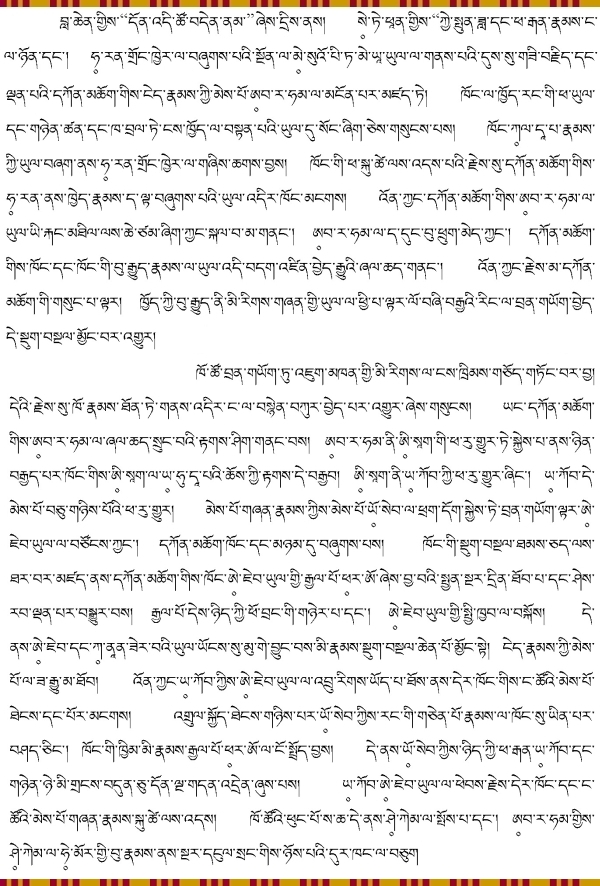
Acts 7.17 - 34 w B


17 “But as the time of the promise drew near, which God had granted to Abraham, the people increased and multiplied in Egypt 18 until there arose over Egypt another king who did not know Joseph. 19 He dealt shrewdly with our race and forced our fathers to expose their infants, so that they would not be kept alive. 20 At this time Moses was born; and he was beautiful in God’s sight. And he was brought up for three months in his father’s house, 21 and when he was exposed, Pharaoh’s daughter adopted him and brought him up as her own son. 22 And Moses was instructed in all the wisdom of the Egyptians, and he was mighty in his words and deeds. 23 “When he was forty years old, it came into his heart to visit his brothers, the children of Israel. 24 And seeing one of them being wronged, he defended the oppressed man and avenged him by striking down the Egyptian. 25 He supposed that his brothers would understand that God was giving them salvation by his hand, but they did not understand. 26 And on the following day he appeared to them as they were quarreling and tried to reconcile them, saying, ‘Men, you are brothers. Why do you wrong each other?’ 27 But the man who was wronging his neighbor thrust him aside, saying, ‘Who made you a ruler and a judge over us? 28 Do you want to kill me as you killed the Egyptian yesterday?’ 29 At this retort Moses fled and became an exile in the land of Midian, where he became the father of two sons. 30 “Now when forty years had passed, an angel appeared to him in the wilderness of Mount Sinai, in a flame of fire in a bush. 31 When Moses saw it, he was amazed at the sight, and as he drew near to look, there came the voice of the Lord: 32 ‘I am the God of your fathers, the God of Abraham and of Isaac and of Jacob.’ And Moses trembled and did not dare to look. 33 Then the Lord said to him, ‘Take off the sandals from your feet, for the place where you are standing is holy ground. 34 I have surely seen the affliction of my people who are in Egypt, and have heard their groaning, and I have come down to deliver them. And now come, I will send you to Egypt.’ (Acts 7:17-34)


History of Israel

2. The Training of Moses for Leadership

Stephen has been accused of blasphemy against Moses and God. So now he describes how carefully God chose, directed and prepared the life of his man, Moses, with the result that the once-proud prince became Israel’s greatest leader.

a. As a babe he was rescued in a remarkable way

b. The lion-like mature man had to be tamed. For another 40 years he earned his living as an exile and shepherd for his father-in-law, and learned to be a humble  servant. (Moses wrote the story of these years in the book of Exodus, chapters 2 and 3)

c. Then an angel drew Moses to a burning bush, and he abased himself. So God spoke to him, “I am the God of your people (in Hebrew language, the ‘Yahweh, I am God’). Now go and save the Israelites, my people.” (Read the story in the book of Exodus, chapter 3)

****************

Editor’s note: God describes himself as “I am”. I.e. He is what he is; so he is truly himself (rang dgnos nges). He is not dependent, but self-established (rang bzhin gyis grub pa).